
Civilization and Its Discontents
Sigmund Freud Translated From German And Edited By James Strachey.
1962
View book
Book guide and evaluation
Bruce Reis,Robert Grossmark
0 reviews
Published
pages
views
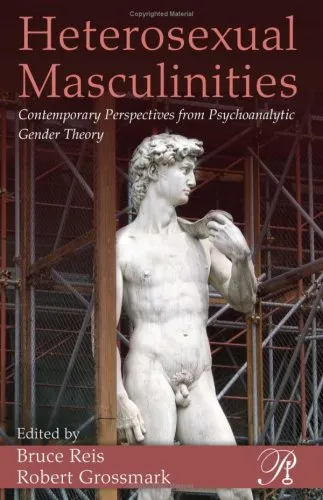
Introduction Heterosexual Masculinities: Contemporary Perspectives from Psychoanalytic Gender Theory by Bruce Reis and Robert Grossmark is a seminal exploration into the complexities of heterosexual masculinity through the lens of psychoanalytic gender theory. The book bri
Before you read
Heterosexual Masculinities: Contemporary Perspectives from Psychoanalytic Gender Theory by Bruce Reis and Robert Grossmark is a seminal exploration into the complexities of heterosexual masculinity through the lens of psychoanalytic gender theory. The book bridges traditional psychoanalytic approaches with contemporary insights into gender studies, offering a profound new perspective on how heterosexual male identities are formed, negotiated, and expressed in today's world. Not confined to academic discourse, this book resonates with anyone curious about the intersections of psychology, gender, and societal norms.
In a cultural era increasingly characterized by critical engagement with traditional gender norms, Reis and Grossmark provide a thoughtful and nuanced discussion on a topic that is often misunderstood or oversimplified. By examining how heterosexual masculinities are influenced by external societal pressures and internal psychological factors, the book challenges stereotypes and opens up much-needed dialogues around gender identity and personal authenticity.
The book is structured around the notion that heterosexual masculinity is not a static or monolithic concept but rather a complex and evolving construct influenced by multiple intersecting forces. Drawing upon foundational psychoanalytic theories while incorporating modern frameworks, the authors delve deeply into critical questions of identity, power, vulnerability, and relationality.
At its core, the book interrogates the dominant narratives of masculinity, which often emphasize strength, stoicism, and control. Reis and Grossmark argue that these clichéd depictions can be harmful, reducing the richness of the male experience and disallowing space for emotional expression or individuality. Through clinical examples, cultural analysis, and theoretical exploration, the book seeks to uncover the hidden dimensions of heterosexual masculinities, showcasing how men navigate the complexities of love, intimacy, and self-perception.
The authors also explore the unconscious elements that shape masculinity and how they intersect with societal dynamics. They offer a psychoanalytic perspective on themes such as competition, vulnerability, intimacy, and shame, providing readers with tools for recognizing and deconstructing the psychological mechanisms underpinning these experiences. Ultimately, the work provides a framework for understanding masculinity as fluid and diverse rather than rigid and prescriptive.
"Masculinity has long been misunderstood as a rigid archetype, yet it is a living, breathing complexity that deserves exploration beyond societal clichés."
"To fully realize our humanity, we must embrace vulnerability, not as a weakness, but as the cornerstone of authentic connection."
Heterosexual Masculinities: Contemporary Perspectives from Psychoanalytic Gender Theory is a vital contribution to the ongoing dialogue around gender, identity, and human psychology. The book addresses a critical gap in psychoanalytic and gender theory by focusing on the complexities of heterosexual masculinity, a topic often neglected or oversimplified.
At a time when traditional gender norms are under scrutiny and calls for inclusive discussions about masculinity are growing louder, this book provides essential insights for therapists, educators, and anyone interested in fostering a deeper understanding of gendered experiences. By challenging entrenched stereotypes and debunking myths, the authors advocate for a more compassionate and multifaceted view of what it means to be a man in today’s world.
The work transcends academia to deliver a message that is both timely and universal: that understanding masculinity in its full spectrum is not just a matter of intellectual curiosity but a necessity for building healthier communities and relationships. This book lights the way forward for rethinking masculinity in ways that respect its diversity and complexity.
Your question is answered in the context of this title and author. Each answer uses 2 points.
0 reviews, 4.5 average out of 5
Sign in to publish a review.
Ask a focused question and learn from the community.
Related references that continue this learning path.
Sigmund Freud Translated From German And Edited By James Strachey.
Sigmund Freud,James Strachey,Christopher Hitchens

Sigmund Freud;Alan Tyson (editor);Alix Strachey (editor);Anna Freud;James Strachey