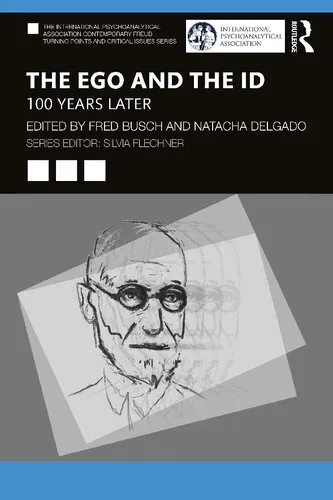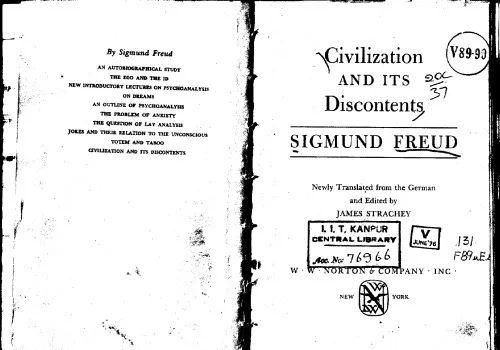
Civilization and Its Discontents
Sigmund Freud Translated From German And Edited By James Strachey.
1962
View book
Book guide and evaluation
Sigmund Freud
0 reviews
Published
pages
views
Welcome to a comprehensive introduction to Sigmund Freud's seminal work, The Ego and the Id. This book, first published in 1923, delves into the profound depths of human psychology, introducing key concepts that have shaped the landscape of psychoanalytic theory. In this introd
Before you read
Welcome to a comprehensive introduction to Sigmund Freud's seminal work, The Ego and the Id. This book, first published in 1923, delves into the profound depths of human psychology, introducing key concepts that have shaped the landscape of psychoanalytic theory. In this introduction, we will explore a detailed summary of the book, highlight its key takeaways, present some of the most famous quotes, and discuss why this timeless text still matters today.
In The Ego and the Id, Freud expands upon his earlier theories of the psyche's structure, first introduced in his topographical model, by presenting the structural model. This new model elucidates the complex interplay between three fundamental components of the mind: the id, the ego, and the superego.
The id is described as the primitive, instinctual part of the mind that operates according to the pleasure principle. It seeks immediate gratification for its urges and desires, dwelling in the unconscious mind. The ego, conversely, functions in both the conscious and unconscious realms, operating according to the reality principle. It mediates between the desires of the id and the moralistic demands of the superego, which embodies societal norms and ethics.
This book is revolutionary in its insights into how these components interact within the individual, shaping behavior and personality. Freud suggests that much of human behavior is influenced by unconscious motivations, revealing the complexity of human actions and experiences.
"The ego is not master in its own house."
“Where id was, there ego shall be.”
The Ego and the Id marks a pivotal point in psychology, offering a more nuanced understanding of the human mind. It represents a shift from a singular view of human consciousness to a multifaceted perspective, acknowledging the conflict and cooperation between various components of the psyche.
The insights from this book have not only influenced the field of psychoanalysis but have also permeated other disciplines, including education, art, literature, and even popular culture. Freud’s exploration of the unconscious continues to inspire both clinicians and scholars in examining the roots of human behavior, making this work an invaluable resource for anyone interested in the complexities of the human mind.
To this day, Freud’s concepts of the id, ego, and superego provide foundational knowledge in psychology, offering tools to understand both normal and pathological human behavior. By critically examining the dynamics within the mind, Freud’s writings challenge us to perceive our internal world in a transformative way.
Your question is answered in the context of this title and author. Each answer uses 2 points.
0 reviews, 4.6 average out of 5
Sign in to publish a review.
Ask a focused question and learn from the community.
Related references that continue this learning path.
Sigmund Freud Translated From German And Edited By James Strachey.
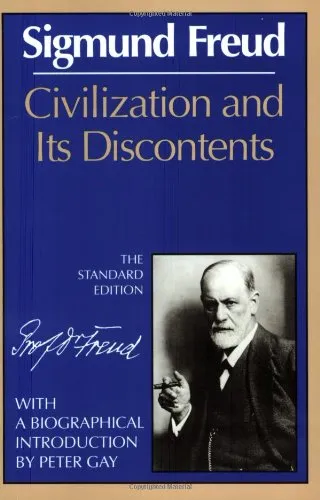
Sigmund Freud,James Strachey,Christopher Hitchens

Sigmund Freud;Alan Tyson (editor);Alix Strachey (editor);Anna Freud;James Strachey