

The Law of Corporate Finance: General Principles and EU Law: Volume III: Funding, Exit, Takeovers
Petri Mäntysaari (auth.)
2010
View book
Book guide and evaluation
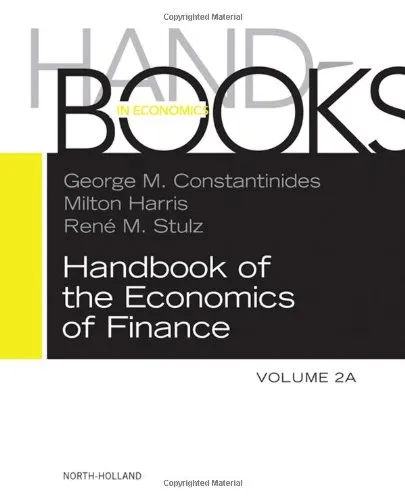
George M. Constantinides,Milton Harris,Rene M. Stulz
0 reviews
Published
pages
views
Introduction Welcome to the Handbook of the Economics of Finance SET: Volumes 2A & 2B, Corporate Finance and Asset Pricing, an extensive compendium that delves into the intricacies and dynamic landscapes of corporate finance and asset pricing. Edited by esteemed scholars G
Before you read
Welcome to the Handbook of the Economics of Finance SET: Volumes 2A & 2B, Corporate Finance and Asset Pricing, an extensive compendium that delves into the intricacies and dynamic landscapes of corporate finance and asset pricing. Edited by esteemed scholars George M. Constantinides, Milton Harris, and Rene M. Stulz, this two-volume set serves as an indispensable resource for academics, practitioners, and anyone with a deep interest in the financial world. Our handbook encapsulates the forefront of financial research, presenting both foundational theories and contemporary innovations.
The Handbook of the Economics of Finance is divided into two comprehensive volumes, each focusing on a critical aspect of finance. Volume 2A is dedicated to corporate finance, addressing the internal mechanics of corporations, investment decisions, capital structure, and the intricacies of mergers and acquisitions. Volume 2B shifts the spotlight to asset pricing, covering models, empirical testing, market efficiency, and risk management.
Together, these volumes compile authoritative essays and critical analyses by leading experts who have significantly contributed to the field. Each chapter examines various theories and their applications, grounded in rigorous empirical research and enhanced by case studies and real-life applications. This handbook provides readers with a rich repository of knowledge that synthesizes past insights while charting new directions for future research.
"Understanding the nuances of corporate finance and asset pricing is imperative for deciphering the complexities of today's economic environment."
"The dynamic nature of finance calls for a constant reevaluation of theories, as they adapt and evolve in conjunction with market realities."
In today’s rapidly changing economic landscape, the Handbook of the Economics of Finance SET stands out as a critical academic achievement that bridges the gap between theory and practice. It matters not only for its exhaustive exploration of corporate finance and asset pricing but also for its ability to illuminate new paths in financial research.
By providing a comprehensive scholarly foundation, this handbook equips students, researchers, and professionals with the tools they need to develop and implement sophisticated financial models. The diversity of perspectives included ensures a holistic understanding of financial markets and their behaviors, making this handbook a vital reference point for any serious study in finance.
Ultimately, the insights garnered from these volumes promise to empower readers to anticipate market shifts, manage financial risks more efficiently, and contribute to the evolution of financial thought. As such, the handbook remains a cornerstone in the literature of economic finance, influencing both current and future generations of financial scholars.
Your question is answered in the context of this title and author. Each answer uses 2 points.
0 reviews, 4.5 average out of 5
Sign in to publish a review.
Ask a focused question and learn from the community.
Related references that continue this learning path.
Petri Mäntysaari (auth.)

Peter Brusov,Tatiana Filatova,Natali Orekhova

Peter Brusov,Tatiana Filatova,Natali Orekhova