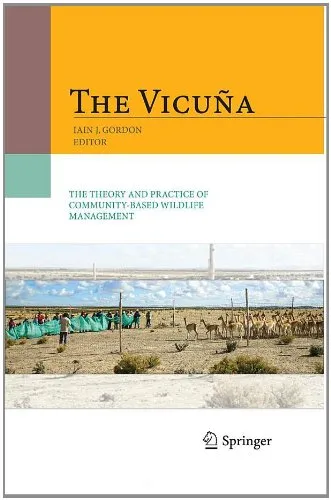
The Vicuna: The Theory and Practice of Community Based Wildlife Management
Iain Gordon (auth.),Iain J. Gordon (eds.)
2009
View book
Book guide and evaluation
Jack, Brian
0 reviews
Published
pages
views
Introduction to "Environmental Law Reviewpp.198—205" The book "Environmental Law Reviewpp.198—205", authored by Jack Brian, stands as a comprehensive and thought-provoking analysis of the evolving landscape of environmental law. As humanity grapples with mounting challenges
Before you read
The book "Environmental Law Reviewpp.198—205", authored by Jack Brian, stands as a comprehensive and thought-provoking analysis of the evolving landscape of environmental law. As humanity grapples with mounting challenges related to climate change, resource depletion, and ecological degradation, this book delves deep into the intricate web of policies, legal frameworks, and ethical considerations designed to protect the environment and promote sustainability. Whether you are a scholar, legal practitioner, or someone deeply interested in environmental advocacy, this book offers a crucial look into pressing issues while empowering readers with knowledge and actionable insights.
At its core, "Environmental Law Reviewpp.198—205" explores the intersection of environmental justice, legal principles, and global commitments designed to mitigate environmental harm. The text is divided into distinctive sections, each meticulously analyzing environmental law through both international and local perspectives. Starting with the historical evolution of environmental regulations, the book journeys through significant treaties, legal precedents, and case studies. A particular emphasis is placed on the concepts of sustainable development, corporate accountability, and governmental responsibilities.
Jack Brian draws on real-world examples, making chapters relatable and digestible for readers. From the Paris Agreement to grassroots-level environmental movements, this book ties together smaller narratives into a global tapestry of legal responses to environmental challenges. The latter chapters discuss innovative solutions, including the role of technology, public policy, and stakeholder collaboration in advancing environmental protection efforts. By the end, readers are equipped with a thorough understanding of environmental law's principles, relevance, and future directions.
"A planet without laws to protect its resources is akin to a house without a foundation—although it might stand for a while, it is destined to crumble."
"Environmental law is humanity's conscience, reminding us of the delicate balance between what we take from the Earth and what we leave for future generations."
"The fight for environmental justice isn't just about preserving nature; it's about dismantling systems of inequality that harm both the planet and its people."
The significance of "Environmental Law Reviewpp.198—205" lies in its ability to illuminate pathways toward effective environmental governance in the wake of pressing challenges. As societies worldwide confront the impacts of climate change, biodiversity loss, and pollution, understanding the nuances of environmental law becomes indispensable. This book serves as both a guide and a call to action, inspiring readers to hold governments, corporations, and themselves accountable for the planet's well-being.
Moreover, the book fosters a deeper appreciation for the interconnectedness of environmental law and social justice. By examining case studies and highlighting the voices of marginalized communities most impacted by environmental harm, Jack Brian crafts a narrative of resilience and responsibility. Whether you're a legal scholar, policy enthusiast, or environmental advocate, you'll find inspiration and insight within its pages that will empower you to contribute to a more sustainable future.
In conclusion, "Environmental Law Reviewpp.198—205" is not merely a book; it is a vital resource for understanding our shared responsibility to the planet. With a blend of historical context, current frameworks, and future possibilities, it captures a holistic picture of environmental justice in action. As you explore its chapters, prepare to rethink, reimagine, and renew your commitment to protecting our home—Earth.
Your question is answered in the context of this title and author. Each answer uses 2 points.
0 reviews, 4.7 average out of 5
Sign in to publish a review.
Ask a focused question and learn from the community.
Related references that continue this learning path.
Iain Gordon (auth.),Iain J. Gordon (eds.)