Research methods in human resource management : investigating a business issue
Fiona Jane Robson;Rita Fontinha;(Principal lecturer) Valerie Anderson
2020
View book
Book guide and evaluation
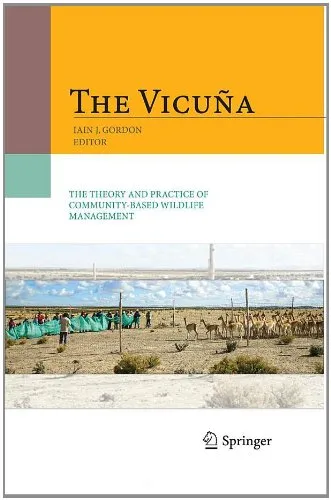
Iain Gordon (auth.),Iain J. Gordon (eds.)
0 reviews
Published
pages
views
Introduction to The Vicuna: The Theory and Practice of Community Based Wildlife Management The Vicuna: The Theory and Practice of Community Based Wildlife Management explores the delicate balance between wildlife conservation and human development, centering on the vicuna, a c
Before you read
The Vicuna: The Theory and Practice of Community Based Wildlife Management explores the delicate balance between wildlife conservation and human development, centering on the vicuna, a camelid native to the high Andes. By shedding light on this unique animal, the book provides insights into community-based wildlife management (CBWM) and its potential role in sustainable development.
The book encapsulates a comprehensive analysis of the vicuna’s ecology, socio-economic importance, and integration into local and international conservation frameworks. It begins by delving into the biology of the vicuna, explaining its significance not only as a species but also as a symbol of the conservation movement in the Andean region. Historical factors that led to its near extinction are carefully examined, as well as the current measures that have been successful in its recovery.
Central to the book is the concept of community-based wildlife management (CBWM), which is presented as a collaborative approach involving local communities to ensure sustainable wildlife utilization. Case studies abound in describing how various communities across South America have adopted this model. The economic calculus of vicuna fiber trade is scrutinized, showcasing a pathway for local empowerment while safeguarding wildlife conservation. The interconnectedness of traditional practices and modern conservation strategies is portrayed, illustrating a unique synergy necessary for the vicuna's ongoing survival.
The narrative progresses to discuss the practical challenges and successes of implementing CBWM, providing illustrative examples of stakeholder engagement and conflict resolution. Additionally, the book raises poignant questions about the changing global landscape and its implications for both local communities and wildlife management policies, making it an essential resource for policymakers, conservationists, and community leaders.
"Conservation does not exist in isolation but thrives where people see value in preserving the natural world."
"When people and wildlife are viewed as allies rather than adversaries, true progress is made."
The Vicuna: The Theory and Practice of Community Based Wildlife Management stands as an important contribution to the discourse on sustainability and wildlife management. As the pressures of climate change and human expansion increase, this book highlights the importance of integrative and inclusive management strategies. It champions the engagement and empowerment of local communities as pivotal to the conservation of biodiversity and the preservation of cultural heritage in the Andes and beyond.
By focusing on the vicuna, the book also addresses broader issues of animal conservation, highlighting the complexity and necessity of balancing human livelihoods with ecological protection. As such, it serves as a critical guide for academics, practitioners, and policymakers dedicated to advancing sustainable development goals through innovative management practices.
Your question is answered in the context of this title and author. Each answer uses 2 points.
0 reviews, 4.0 average out of 5
Sign in to publish a review.
Ask a focused question and learn from the community.
Related references that continue this learning path.
Fiona Jane Robson;Rita Fontinha;(Principal lecturer) Valerie Anderson
Peter V. N. Henderson