
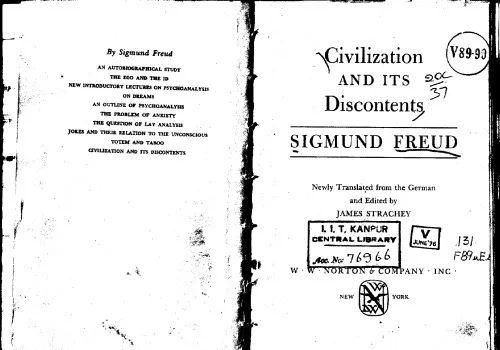
Civilization and Its Discontents
Sigmund Freud Translated From German And Edited By James Strachey.
1962
View book
Book guide and evaluation
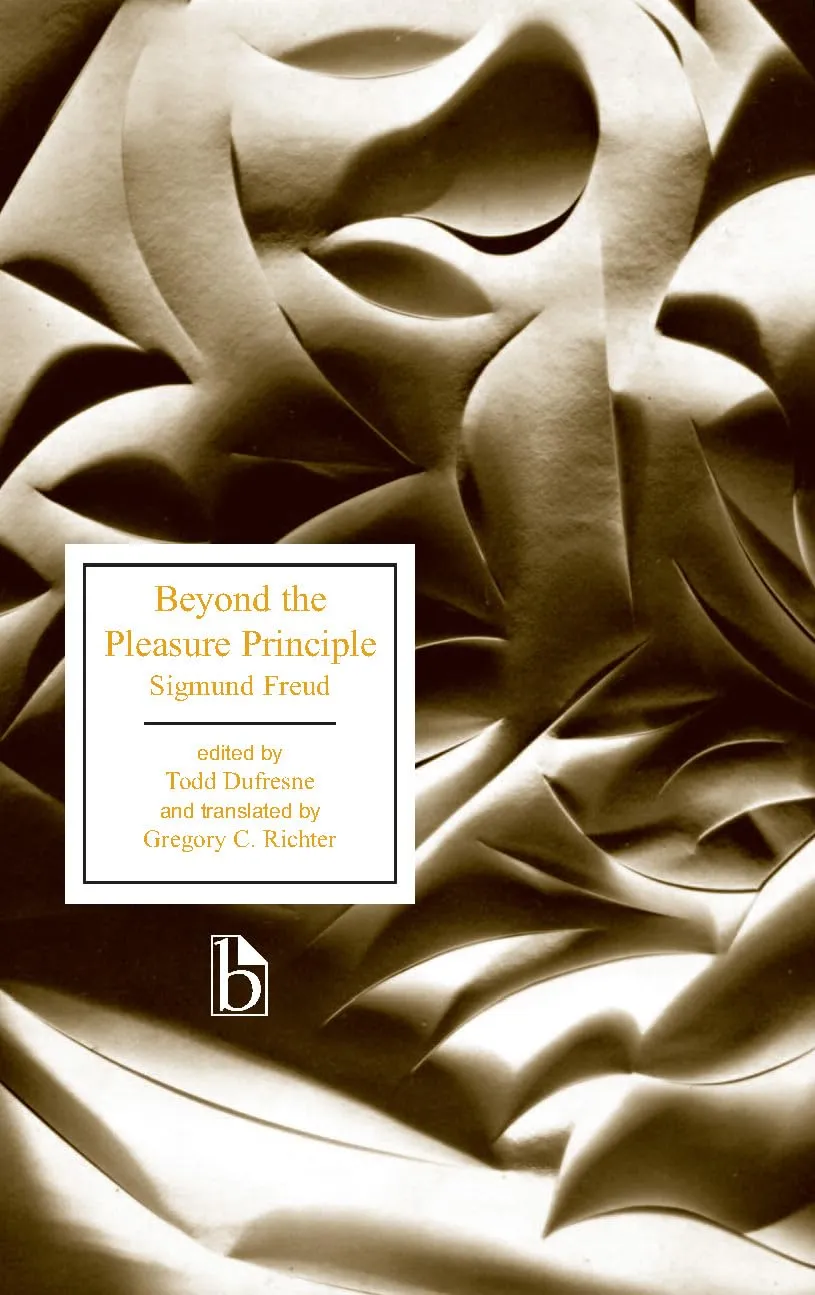
Sigmund Freud,Todd Dufresne (editor)
0 reviews
Published
pages
views
Introduction to "Beyond the Pleasure Principle" Sigmund Freud's seminal work, "Beyond the Pleasure Principle," delves into the complexities of human psychology that exist beyond our innate pursuit of pleasure. Edited by Todd Dufresne, this Broadview Edition provides critic
Before you read
Sigmund Freud's seminal work, "Beyond the Pleasure Principle," delves into the complexities of human psychology that exist beyond our innate pursuit of pleasure. Edited by Todd Dufresne, this Broadview Edition provides critical insights into one of Freud's most nuanced theories, encapsulating his profound exploration of the human mind's inner workings.
In "Beyond the Pleasure Principle," Freud challenges the prevailing notion that human behavior is primarily driven by the desire to seek pleasure and avoid pain—what he termed the "pleasure principle." Instead, Freud introduces the concept of the "death drive" (Thanatos), a fundamental impulse toward destruction, aggression, and a return to an inorganic state. The tension between Eros (life instincts) and Thanatos (death instincts) forms the basis for many psychological phenomena that cannot be explained by the pleasure principle alone.
The book begins with Freud's observations on repetitive behavior, particularly in patients traumatized by war and in children who play out distressing experiences. He postulates that such behaviors may not be a pursuit of pleasure but an expression of the compulsion to repeat experiences to master them. Freud proceeds to discuss the notion of the death drive as a counterpoint to the life-generating forces of Eros, suggesting that the interplay of these forces shapes human behavior in profound ways.
Freud's exploration of these dual instincts extends to the realm of psychoanalysis itself, examining how the death drive influences therapeutic processes and unconscious motivations. The work underscored a significant departure from Freud's earlier theories and laid the groundwork for further exploration of aggression and destructiveness in psychoanalysis and beyond.
"The pleasure principle...dominates the operation of the mental apparatus from the start."
"We may perhaps be driven to the hypothesis that there exists in the mind a compulsion to repeat which overrides the pleasure principle."
"The goal of all life is death; and looking backwards, one might say: the inanimate was there before the animate."
"Beyond the Pleasure Principle" is a landmark in psychoanalytic literature that extends Freud's theoretical framework, offering a deeper understanding of the complexities of human nature. Its introduction of the death drive enriched discussions in various disciplines, influencing subsequent thinkers and continuing to be a pivotal reference in psychology, literature, and philosophy.
Freud's groundbreaking ideas challenge the optimistic view of humanity solely driven by pleasure-seeking, proposing a more intricate and dualistic view of the human psyche. By advocating for this expanded view, the book forces readers to reconsider intrinsic motivations and the inherent conflict between creation and destruction within ourselves.
This enriched edition, edited by Todd Dufresne, provides crucial context and clarity, ensuring contemporary readers grasp both the historical significance and the enduring influence of Freud's radical propositions. Whether you're a student of psychoanalysis, a literary scholar, or a curious reader, "Beyond the Pleasure Principle" remains an essential text for understanding the depths of human motivation and behavior.
Your question is answered in the context of this title and author. Each answer uses 2 points.
0 reviews, 4.0 average out of 5
Sign in to publish a review.
Ask a focused question and learn from the community.
Related references that continue this learning path.
Sigmund Freud Translated From German And Edited By James Strachey.
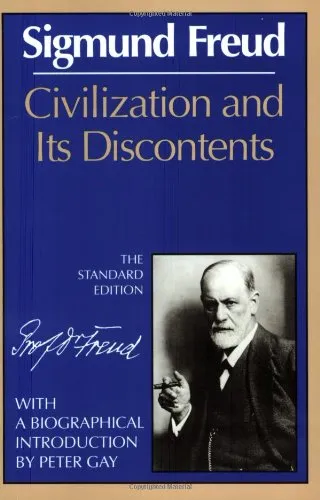
Sigmund Freud,James Strachey,Christopher Hitchens
Sigmund Freud;Alan Tyson (editor);Alix Strachey (editor);Anna Freud;James Strachey