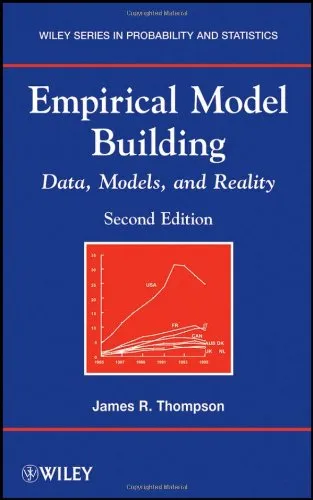
Empirical Model Building: Data, Models, and Reality, Second Edition
James R. Thompson
2011
View book
Book guide and evaluation
Giulio D. Agostini
0 reviews
Published
pages
views
Welcome to an immersive journey into the world of Bayesian inference and its critical role in data analysis. "Bayesian Reasoning in Data Analysis: A Critical Introduction" serves as both a comprehensive guide and a critical appraisal of Bayesian methods applied in the realm o
Before you read
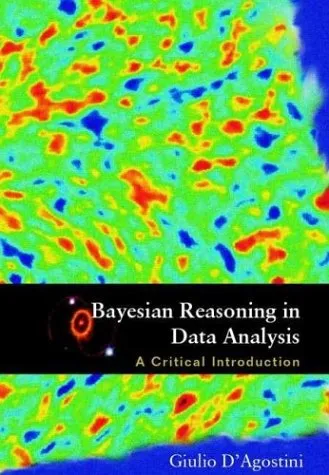
Welcome to an immersive journey into the world of Bayesian inference and its critical role in data analysis. "Bayesian Reasoning in Data Analysis: A Critical Introduction" serves as both a comprehensive guide and a critical appraisal of Bayesian methods applied in the realm of data analysis.
The book begins by establishing a strong foundation in the principles of Bayesian reasoning. Readers are introduced to the historical context and mathematical groundwork that supports the Bayesian paradigm. It delves into the contrast between Bayesian and frequentist methodologies, highlighting the philosophical and practical nuances that accompany each approach.
Every chapter is meticulously crafted to unravel the complexities of Bayesian statistics, covering topics such as prior selection, likelihood functions, and posterior distributions. The text embraces a pedagogical style, with ample examples and exercises designed to reinforce understanding. In addition, contemporary topics like hierarchical models, Bayesian networks, and computational techniques like Markov Chain Monte Carlo (MCMC) methods are explored in depth.
What makes this tome particularly valuable is its critical lens. The author evaluates the limitations and criticisms of Bayesian inference, offering a balanced perspective that encourages the reader to engage in analytical thinking. This guide does not merely instruct; it invites readers to question and explore the Bayesian framework with diligence and curiosity.
"In Bayesian reasoning, knowledge is fluid and ever-evolving, shaped continually by new evidence and perspectives."
"The choice of priors is an art, not just a computational necessity. It reflects one's beliefs, yet must withstand the scrutiny of evidence."
In an era where data reigns supreme, understanding the tools and methodologies to interpret data effectively is crucial. This book stands out as a vital resource for students, researchers, and practitioners who seek to deepen their understanding of Bayesian data analysis. It goes beyond mere technical instruction by fostering a mindset of critical inquiry and adaptability in the face of uncertainty.
The rigorous yet accessible approach makes it suitable for both beginners and those with a strong background in statistics. The inclusion of real-world applications and case studies enhances its practicality, making Bayesian reasoning not just a theoretical construct, but a valuable tool in diverse fields such as economics, medicine, engineering, and more.
Embrace this critical introduction to Bayesian reasoning, and equip yourself with the knowledge and insight required to navigate the complexities of modern data analysis.
Your question is answered in the context of this title and author. Each answer uses 2 points.
0 reviews, 4.5 average out of 5
Sign in to publish a review.
Ask a focused question and learn from the community.
Related references that continue this learning path.
James R. Thompson