
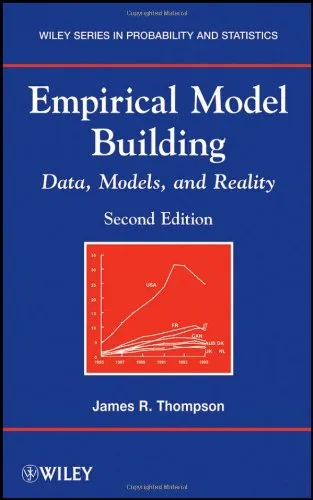
Empirical Model Building: Data, Models, and Reality, Second Edition
James R. Thompson
2011
View book
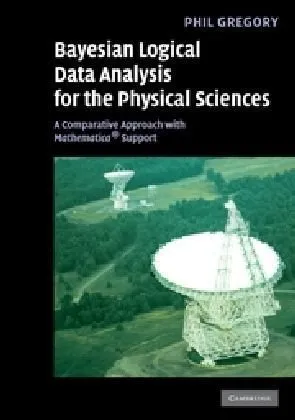
Book guide and evaluation
Phil Gregory
0 reviews
Published
pages
views
Introduction to "Bayesian Logical Data Analysis for the Physical Sciences: A Comparative Approach with Mathematica® Support" Immerse yourself in the transformative world of Bayesian analysis and elevate your data science acumen with Phil Gregory's seminal work, "Bayesian Logic
Before you read
Immerse yourself in the transformative world of Bayesian analysis and elevate your data science acumen with Phil Gregory's seminal work, "Bayesian Logical Data Analysis for the Physical Sciences: A Comparative Approach with Mathematica® Support." This book offers an unparalleled exploration of Bayesian logical data analysis tailored specifically for the physical sciences, empowering researchers, students, and professionals to make informed scientific inferences using the robust Bayesian framework.
Within this comprehensive guide, Phil Gregory unravels the intricacies of Bayesian analysis and its practical applications in the physical sciences. The book is methodically structured to provide a deep understanding of Bayesian methods, with an emphasis on comparative approaches that evaluate traditional versus Bayesian methodologies. Through its innovative integration with Mathematica®, the text offers practical, hands-on support, enabling readers to develop their skills through real-world examples and exercises.
The book is designed for those who have a foundational understanding of statistical concepts but wish to delve deeper into Bayesian methods to enhance their scientific inquiries. Gregory walks the readers through the essential concepts of Bayesian probability, statistical inference, and their logical underpinnings, building a solid foundation and leading to advanced topics such as Markov Chain Monte Carlo techniques, model comparison, and data-driven inference.
“The power of Bayesian analysis lies in its ability to incorporate prior knowledge, thereby refining scientific conclusions in a way that often reflects real-world processes more accurately than frequentist methods.”
“In the realm of scientific inquiries, mastering the Bayesian approach allows researchers to grapple with uncertainty and embrace it as a guiding light for uncovering the truths hidden within data.”
In an era where data drives decision-making in science and beyond, understanding how to analyze and interpret this data correctly becomes crucial. Traditional frequentist methods, while useful, can often fall short when it comes to incorporating prior knowledge and making nuanced inferences. This book matters because it bridges that gap, offering the scientific community a detailed and structured approach to Bayesian analysis, unlocking new possibilities for research and discovery.
The addition of Mathematica® support sets this book apart by providing readers with an accessible platform to apply Bayesian concepts practically. This integration ensures that theoretical learning is complemented by valuable hands-on experience, equipping scientists with the tools they need to conquer real-world challenges.
Ultimately, "Bayesian Logical Data Analysis for the Physical Sciences" isn't just a book; it's a roadmap to a new lens through which scientific data can be understood. It empowers professionals in the field to make more informed and accurate scientific interpretations, paving the way for innovations and advancements across various domains of the physical sciences.
Your question is answered in the context of this title and author. Each answer uses 2 points.
0 reviews, 4.5 average out of 5
Sign in to publish a review.
Ask a focused question and learn from the community.
Related references that continue this learning path.
James R. Thompson

Bani K. Mallick,David Gold,Veera Baladandayuthapani