Book guide and evaluation
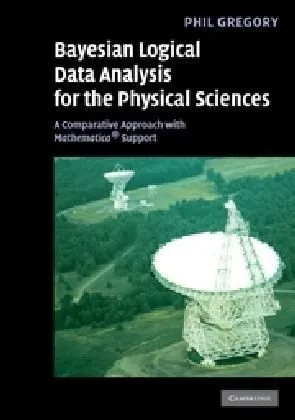
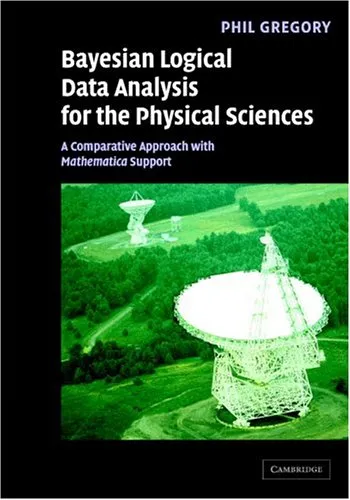
Bayesian Logical Data Analysis For The Physical Sciences - A Comparative Approach With Mathematica
Phil Gregory
English
Beginner
Data Modeling
4.5 / 5
0 reviews
2005
Published
488
pages
415
views
Introduction to Bayesian Logical Data Analysis For The Physical Sciences - A Comparative Approach With Mathematica Welcome to an in-depth exploration of Bayesian logical data analysis, a crucial tool for scientific research. This book delves into the methodologies and applicat
Before you read
What will you get from this book?
Introduction to Bayesian Logical Data Analysis For The Physical Sciences - A Comparative Approach With Mathematica
Welcome to an in-depth exploration of Bayesian logical data analysis, a crucial tool for scientific research. This book delves into the methodologies and applications of Bayesian inference in the physical sciences, enriched with comparative analysis and practical guidance using Mathematica.
Detailed Summary of the Book
In "Bayesian Logical Data Analysis for the Physical Sciences," I, Phil Gregory, offer a comprehensive examination of Bayesian probabilistic methods as an alternative to frequentist statistics in analyzing physical science data. The book bridges the gap between theory and practice, providing scientific researchers and students the footing to implement Bayesian techniques in their own work.
The book is structured to guide readers from the foundational principles of probability and logic to the intricate workings of Bayesian inference. Empowering readers to harness Mathematica software effectively, it lays out how to apply Bayesian methods to data analysis scenarios frequently encountered in physical studies. As you progress through the chapters, the methodologies shift from theoretical underpinnings to case studies and real-world applications, strengthening the understanding of Bayesian techniques through progressive learning.
Key Takeaways
- Understand the fundamental concepts of Bayesian statistics and how they differ from classical frequentist approaches.
- Gain proficiency in using Mathematica for Bayesian data analysis, leverage built-in functions and create custom scripts for specific statistical challenges.
- Learn to approach data analysis with a logical, evidence-based mindset, enhancing the robustness and validity of scientific conclusions.
- Appreciate the importance of prior information and how it can be systematically combined with new data to inform posterior probabilities.
- Explore detailed examples and case studies that illustrate the application of Bayesian methods across various physical sciences domains.
Famous Quotes from the Book
"The ideal habit of mind for a Bayesian thinker requires a deft balance of skepticism and openness—challenging assumptions while welcoming evidence."
"In Bayesian terms, data is simply another form of evidence, and we must be ever vigilant in the pursuit of truth through informed inference."
Why This Book Matters
This book is pivotal for several reasons. First, it democratizes access to Bayesian methodologies by providing clear, accessible expositions coupled with practical tools. By utilizing Mathematica, a powerful computing language, the book offers an intuitive platform to perform computations, visualize results, and explore the ramifications of Bayesian analysis—transforming complex mathematical operations into tangible insights.
The impact of adopting Bayesian thinking in the physical sciences cannot be overstated. As datasets grow in volume and complexity, the ability to incorporate prior knowledge and flexibly update beliefs with new evidence becomes increasingly critical. Bayesian methods offer superior adaptability and rigor, positioning researchers to draw more meaningful conclusions from uncertain data.
Moreover, this book underscores the growing importance of interdisciplinary approaches in scientific inquiry. By effectively integrating statistics, logic, and computational tools, it provides a roadmap for the modern scientist to more accurately model the uncertainties inherent in empirical research.
Ask this book
Your question is answered in the context of this title and author. Each answer uses 2 points.
Sign in to ask the book assistant.
Reader reviews
0 reviews, 4.5 average out of 5
No reviews yet
If you have read this book, help the next reader with your experience.
Write a review
Sign in to publish a review.
Reader questions and answers
Ask a focused question and learn from the community.
Sign in to ask or answer a question.
No questions yet
Be the first to ask a clear, useful question.
What to read next
Related references that continue this learning path.