Loading
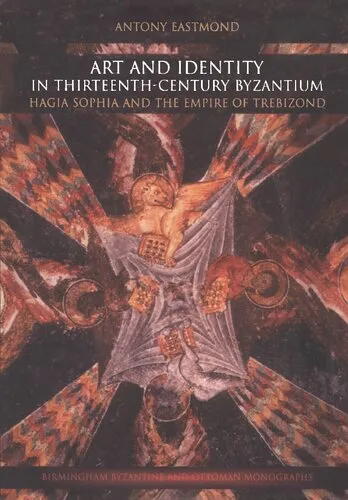
Cover of Art and Identity in Thirteenth-Century Byzantium: Hagia Sophia and the Empire of Trebizond (Birmingham Byzantine and Ottoman Studies)

Book guide and evaluation

Art and Identity in Thirteenth-Century Byzantium: Hagia Sophia and the Empire of Trebizond (Birmingham Byzantine and Ottoman Studies)

Antony Eastmond

English Advanced Art
4.5 / 5

0 reviews

2004

Published

247

pages

372

views

The church of Hagia Sophia in Trebizond, built by the emperor Manuel I Grand Komnenos (1238-63) in the aftermath of the fall of Constantinople to the Fourth Crusade, is the finest surviving Byzantine imperial monument of its period. Art and Identity in Thirteenth-Century Byzantiu

Before you read

What will you get from this book?

The church of Hagia Sophia in Trebizond, built by the emperor Manuel I Grand Komnenos (1238-63) in the aftermath of the fall of Constantinople to the Fourth Crusade, is the finest surviving Byzantine imperial monument of its period. Art and Identity in Thirteenth-Century Byzantium is the first investigation of the church in more than thirty years, and is extensively illustrated in colour and black-and-white, with many images that have never previously been published. Antony Eastmond examines the architectural, sculptural and painted decorations of the church, placing them in the context of contemporary developments elsewhere in the Byzantine world, in Seljuq Anatolia and among the Caucasian neighbours of Trebizond. Knowledge of this area has been transformed in the last twenty years, following the collapse of the Soviet Union. The new evidence that has emerged enables a radically different interpretation of the church to be reached, and raises questions of cultural interchange on the borders of the Christian and Muslim worlds of eastern Anatolia, the Caucasus and Persia. This study uses the church and its decoration to examine questions of Byzantine identity and imperial ideology in the thirteenth century. This is central to any understanding of the period, as the fall of Constantinople in 1204 divided the Byzantine empire and forced the successor states in Nicaea, Epiros and Trebizond to redefine their concepts of empire in exile. Art is here exploited as significant historical evidence for the nature of imperial power in a contested empire. It is suggested that imperial identity was determined as much by craftsmen and expectations of imperial power as by the emperor's decree; and that this was a credible alternative Byzantine identity to that developed in the empire of Nicaea.

Ask this book

Your question is answered in the context of this title and author. Each answer uses 2 points.

Sign in to ask the book assistant.

Reader reviews

0 reviews, 4.5 average out of 5

No reviews yet

If you have read this book, help the next reader with your experience.

Write a review

Sign in to publish a review.

Reader questions and answers

Ask a focused question and learn from the community.

Sign in to ask or answer a question.

No questions yet

Be the first to ask a clear, useful question.