
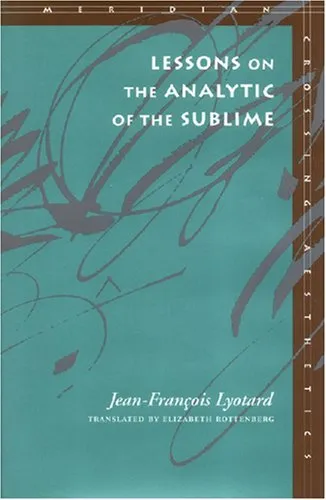
Lessons on the Analytic of the Sublime (Meridian: Crossing Aesthetics)
Jean-Francois Lyotard
1994
View book
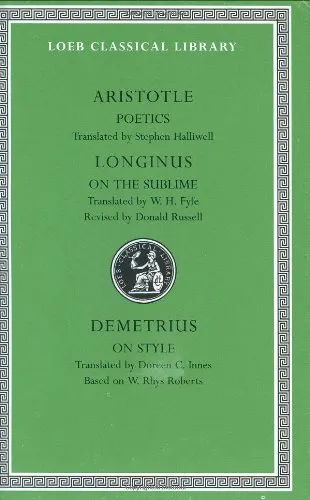
Book guide and evaluation
Aristotle,Longinus,Demetrius
0 reviews
Published
pages
views
Welcome to a comprehensive exploration of literary criticism and theory through the eyes of three monumental figures of antiquity: Aristotle, Longinus, and Demetrius. Their works collectively form a cornerstone in the study of literature, providing insight into tragedy, the sub
Before you read
Welcome to a comprehensive exploration of literary criticism and theory through the eyes of three monumental figures of antiquity: Aristotle, Longinus, and Demetrius. Their works collectively form a cornerstone in the study of literature, providing insight into tragedy, the sublime, and rhetoric. The book 'Aristotle: Poetics; Longinus: On the Sublime; Demetrius: On Style' is a rich compilation that continues to guide and influence modern literary critique and practice.
Aristotle's Poetics is one of the earliest surviving works of dramatic theory, examining the principles of drama and poetry. Aristotle delves into the anatomy of tragedy, defining its core components such as plot, character, diction, thought, spectacle, and song. He famously introduces concepts like catharsis, peripeteia, and anagnorisis, which have become foundational in the understanding of dramatic narratives.
Longinus' On the Sublime, although more fragmented than the other treatises, provides an incisive analysis of greatness in literature. This piece distinguishes itself by focusing on how certain texts evoke profound emotional responses and create a sense of awe, transcending mere technical perfection. Longinus explores a variety of sources for sublimity, ranging from nature to human emotions, championing those works capable of elevating the human spirit.
Demetrius' On Style is a rhetorical manual that investigates the power of language and style. His treatment of literary style categorizes it into four types: the plain, the grand, the elegant, and the forceful. Demetrius offers insights into how writers can modulate their style to fit different contexts and purposes, emphasizing the flexibility and versatility required in effective communication.
Aristotle: "A tragedy is that which, by arousing pity and fear, produces a catharsis of such emotions."
Longinus: "Sublimity is the echo of a great soul."
Demetrius: "A style which is concise and rich bears the impression of a vigorous mind."
This book is essential reading for anyone interested in the foundations of literary and rhetorical theory. Aristotle's systematic approach to literature has influenced a wide range of disciplines beyond literary studies, including philosophy and psychology. Longinus' discussion on the sublime offers a perspective that continues to resonate in discussions about artistic impact and emotional engagement. Demetrius' practical advice on style reminds us of the power of well-chosen words in shaping thought and communicating with an audience.
By bridging classical ideas with contemporary literary analysis, this collection invites readers to appreciate the enduring relevance of ancient wisdom in understanding human expression. For scholars, students, and enthusiasts of literature alike, the teachings of Aristotle, Longinus, and Demetrius provide invaluable insights that enrich the study of texts across all genres and cultures.
Your question is answered in the context of this title and author. Each answer uses 2 points.
0 reviews, 4.5 average out of 5
Sign in to publish a review.
Ask a focused question and learn from the community.
Related references that continue this learning path.
Jean-Francois Lyotard

Jean-François Lyotard