
Book guide and evaluation
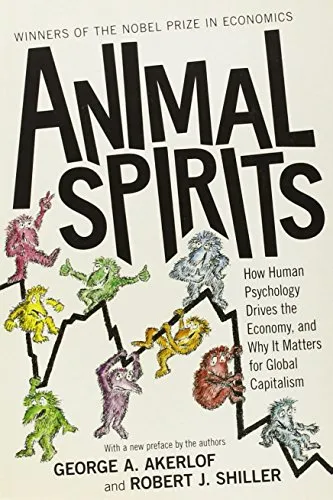
Animal Spirits : How Human Psychology Drives the Economy, and Why It Matters for Global Capitalism (New Edition)
Shiller, Robert J.;Akerlof, George A
English
Beginner
Finance
4.0 / 5
0 reviews
2010,2009
Published
261
pages
560
views
Welcome to "Animal Spirits: How Human Psychology Drives the Economy, and Why It Matters for Global Capitalism (New Edition)"—a pioneering exploration into the psychological factors that fuel economic activity and shape economic systems. Authored by Nobel Laureates, Robert J. Sh
Before you read
What will you get from this book?
Welcome to "Animal Spirits: How Human Psychology Drives the Economy, and Why It Matters for Global Capitalism (New Edition)"—a pioneering exploration into the psychological factors that fuel economic activity and shape economic systems. Authored by Nobel Laureates, Robert J. Shiller and George A. Akerlof, this book offers a refreshing departure from traditional economic doctrines, emphasizing the influence of human emotions and behaviors on macroeconomic outcomes. This introduction delves into the central themes of the book, its key takeaways, memorable quotes, and the significance of its insights. Let's embark on a journey to understand how the human psyche impacts the global economic landscape.
Detailed Summary of the Book
The book "Animal Spirits" challenges the conventional wisdom in economics that often relies on the notion of human beings as rational actors. Shiller and Akerlof argue that human emotions play a crucial role in financial markets and the broader economy. They introduce the concept of "animal spirits," a term borrowed from economist John Maynard Keynes, which refers to the emotional and psychological factors that drive economic decision-making.
Spanning across numerous chapters, the book examines various facets of these animal spirits, including confidence, fairness, corruption, money illusion, and narratives, among others. The authors demonstrate how these psychological elements can lead to phenomena such as economic bubbles, recessions, and financial crises. By analyzing historical events and economic data, they illustrate how these non-rational factors can be more predictive of economic outcomes than traditional models that focus solely on concrete metrics and rational behavior.
Key Takeaways
- The Role of Confidence: Confidence, or the lack thereof, greatly influences economic trends. Fluctuations in confidence can lead to booms and busts in the economy.
- Importance of Fairness: Perceptions of fairness significantly affect economic decisions, from consumer spending to corporate behavior.
- Impact of Corruption and Bad Faith: Trust in institutions and individuals underpins economic stability; when eroded by corruption, it can destabilize economies.
- Money Illusion: People often perceive monetary value incorrectly due to not accounting for inflation or deflation, which can lead to suboptimal economic decisions.
- Narratives Shape Economies: The stories people tell themselves and others about economic events influence collective behavior and can lead to real economic change.
Famous Quotes from the Book
"Animal spirits refers to a restless and inconsistent element in the economy. It refers to our peculiar relationship with ambiguity or uncertainty."
"Confidence is the hinge on which economic prosperity swings."
Why This Book Matters
"Animal Spirits" is a significant work because it compels economists, policymakers, and the public to consider psychological components in economic analysis. In a world often led by quantitative measures and metrics, this book emphasizes the necessity of understanding human psychology to better predict economic phenomena.
The insights from "Animal Spirits" are crucial in crafting economic policies that consider human behavior's unpredictability. In an era of economic uncertainty and rapid change, incorporating these principles can lead to more resilient economic strategies and solutions. The book's perspectives are particularly valuable for investors, economists, sociologists, and anyone interested in understanding the true drivers of economic systems.
Ask this book
Your question is answered in the context of this title and author. Each answer uses 2 points.
Sign in to ask the book assistant.
Reader reviews
0 reviews, 4.0 average out of 5
No reviews yet
If you have read this book, help the next reader with your experience.
Write a review
Sign in to publish a review.
Reader questions and answers
Ask a focused question and learn from the community.
Sign in to ask or answer a question.
No questions yet
Be the first to ask a clear, useful question.
What to read next
Related references that continue this learning path.
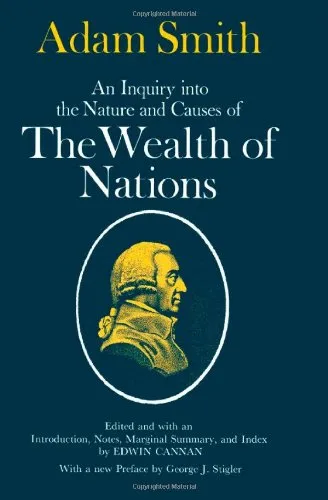
An Inquiry into the Nature and Causes of the Wealth of Nations
Adam Smith,Edwin Cannan
1977
View book