Fooled by Randomness: The Hidden Role of Chance in Life and in the Markets
Nassim Nicholas Taleb
2005
View book
Book guide and evaluation
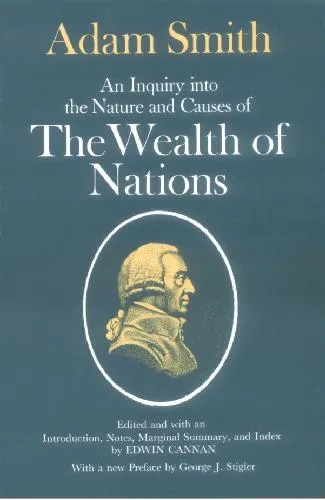
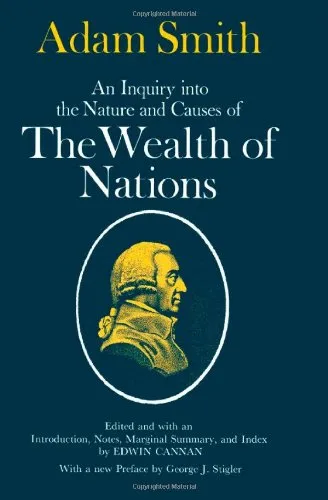
Adam Smith,Edwin Cannan
0 reviews
Published
pages
views
Introduction to 'An Inquiry into the Nature and Causes of the Wealth of Nations' Adam Smith's seminal work, "An Inquiry into the Nature and Causes of the Wealth of Nations," first published in 1776, lays the foundation for modern economic theory. This groundbreaking text e
Before you read
Adam Smith's seminal work, "An Inquiry into the Nature and Causes of the Wealth of Nations," first published in 1776, lays the foundation for modern economic theory. This groundbreaking text explores the development of economic systems, the division of labor, and the importance of free markets.
The Wealth of Nations is divided into five books, each focusing on different aspects of economics and society. In Book I, Smith discusses the principles of the division of labor, the necessity of exchange, and the origins and use of money. Building upon these foundations, Book II delves into the nature of capital and the accumulation of stock. In Book III, Smith examines historical and contemporary economic structures, providing insights into their progress and relative wealth.
Continuing, Book IV critiques previous economic philosophies, particularly mercantilism, and advocates for the benefits of free trade. Finally, Book V addresses the role of government, public finance, and education in the economic structure. Throughout the book, Smith emphasizes the impact of self-interest and competition, guided by an "invisible hand," in shaping prosperous economies.
"It is not from the benevolence of the butcher, the brewer, or the baker, that we expect our dinner, but from their regard to their own interest."
"The real tragedy of the poor is the poverty of their aspirations."
"By pursuing his own interest he frequently promotes that of the society more effectually than when he really intends to promote it."
Adam Smith's "The Wealth of Nations" remains a cornerstone of economic thought, continually influencing economists, policymakers, and scholars. It laid the groundwork for classical economics and introduced concepts that continue to underpin modern economic theories. Smith's exploration of market dynamics, competition, and the role of government has informed economic policy and debate for centuries.
The book's enduring relevance is evident in discussions about globalization, capitalism, and the limits of government intervention in the economy. Its impact is not confined to economic circles; it has influenced political theory, social structures, and philosophical paradigms. By unveiling the mechanisms that drive wealth creation, Smith provided a new lens through which to view society, fostering an understanding of economic systems that has shaped our world.
Your question is answered in the context of this title and author. Each answer uses 2 points.
0 reviews, 4.5 average out of 5
Sign in to publish a review.
Ask a focused question and learn from the community.
Related references that continue this learning path.
Nassim Nicholas Taleb