Book guide and evaluation
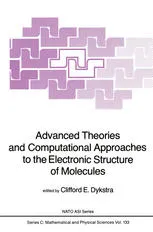
Advanced Theories and Computational Approaches to the Electronic Structure of Molecules
Thom. H. Dunning Jr.,Raymond A. Bair (auth.),Clifford E. Dykstra (eds.)
English
Beginner
Mathematical Logic
4.9 / 5
0 reviews
1984
Published
240
pages
536
views
Introduction Welcome to "Advanced Theories and Computational Approaches to the Electronic Structure of Molecules," a comprehensive exploration of the complex and intricate realm of molecular electronic structures. This book serves as an essential resource for scholars, res
Before you read
What will you get from this book?
Introduction
Welcome to "Advanced Theories and Computational Approaches to the Electronic Structure of Molecules," a comprehensive exploration of the complex and intricate realm of molecular electronic structures. This book serves as an essential resource for scholars, researchers, and students who are deeply involved in the field of computational chemistry and molecular physics. Co-authored by Thom H. Dunning Jr. and Raymond A. Bair, and edited by Clifford E. Dykstra, this work integrates advanced theoretical frameworks with cutting-edge computational methodologies, paving the way for a deeper understanding of molecular systems.
Detailed Summary
The book delves into the development and application of various advanced theories and computational techniques that describe the electronic structure of molecules. It begins by laying a strong foundation in quantum mechanics, offering readers an understanding of the fundamental principles that govern molecular behavior. Following this, it seamlessly transitions into more complex discussions on the latest computational approaches used to simulate molecular systems.
Chapters are meticulously organized to progress from basic to advanced topics, allowing readers to build on their knowledge incrementally. The authors explore a multitude of methods, such as Density Functional Theory (DFT), Hartree-Fock Theory, and Coupled Cluster Theory, providing insights into their respective strengths and limitations. Additionally, the book includes case studies and practical applications, demonstrating the real-world relevance of these theories in disciplines ranging from material science to pharmacology.
Key Takeaways
- Comprehensive coverage of quantum mechanical principles underlying molecular systems.
- In-depth analysis of various state-of-the-art computational methods.
- Discussion of the practical applications and implications of molecular electronic structures.
- Integration of theory with computational practices for a holistic understanding.
Famous Quotes from the Book
"Understanding the electronic structure of molecules not only reveals the beauty of chemistry and physics but also underpins the advancements in technologies that shape our world."
"The role of computation in the modern scientific method is both an art and a science, merging theoretical abstractions with experimental realities."
Why This Book Matters
In an era where computational power is transforming scientific inquiry, this book stands at the forefront by bridging theoretical principles with practical applications. "Advanced Theories and Computational Approaches to the Electronic Structure of Molecules" not only equips readers with a profound understanding of complex molecular systems but also provides the tools needed to harness these principles for innovation and discovery. Whether for academics, industry professionals, or students, this book is an invaluable asset that enriches knowledge and stimulates progress in the field of molecular science.
With its rigorous approach and comprehensive coverage, the book is an indispensable resource that extends beyond traditional textbooks. It provides an insightful, in-depth exploration that encourages continuous learning and critical thinking about the electronic structures that form the foundation of chemistry and material science.
Ask this book
Your question is answered in the context of this title and author. Each answer uses 2 points.
Sign in to ask the book assistant.
Reader reviews
0 reviews, 4.9 average out of 5
No reviews yet
If you have read this book, help the next reader with your experience.
Write a review
Sign in to publish a review.
Reader questions and answers
Ask a focused question and learn from the community.
Sign in to ask or answer a question.
No questions yet
Be the first to ask a clear, useful question.
What to read next
Related references that continue this learning path.