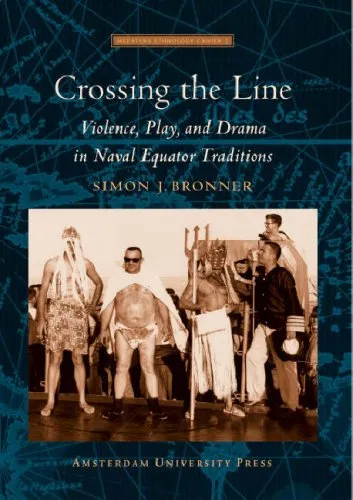
Crossing the Line: Violence, Play, and Drama in Naval Equator Traditions
Simon J. Bronner
2007
View book
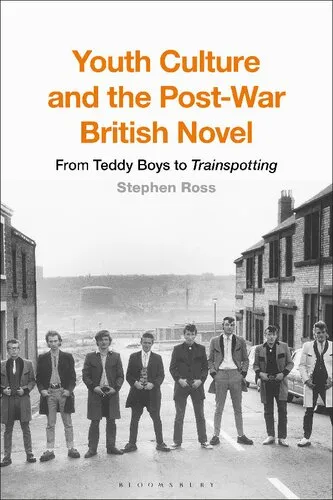
Book guide and evaluation
Stephen Ross
0 reviews
Published
pages
views
Introduction to 'Youth Culture and the Post-War British Novel: From Teddy Boys to Trainspotting' "Youth Culture and the Post-War British Novel: From Teddy Boys to Trainspotting" is an exploration of the dynamic and often unruly spirit of youth as depicted in British literatu
Before you read
"Youth Culture and the Post-War British Novel: From Teddy Boys to Trainspotting" is an exploration of the dynamic and often unruly spirit of youth as depicted in British literature from the 1950s to the mid-1990s. The book delves into how British novelists have captured the essence of youth culture amid sweeping societal changes, illustrating how literature not only reflects but also influences the attitudes, behaviors, and aspirations of young people.
Post-war Britain experienced a cultural revolution that shook its social fabric, transforming a deeply conservative society into one marked by vibrant new forms of self-expression. The emergence of distinct youth subcultures such as the Teddy Boys, Mods, Punks, and Ravers signified more than just fashion and music; they represented groundbreaking shifts in identity and resistance. This book meticulously chronicles how each decade brought its own literary reflections of these youth movements.
Beginning with the Teddy Boys of the 1950s, who challenged the drab monotony of post-war Britain with their flamboyant style and rebellious attitude, the book moves through successive decades, each teeming with its own distinctive youth movements. It examines the Mods and Rockers of the 1960s, touching upon novels like Anthony Burgess's "A Clockwork Orange", which captured the violent exuberance of these subcultures.
As the book progresses into the 1970s and 80s, it examines punk's nihilistic rage in literature, highlighting how novelists like Martin Amis depicted the anger and disillusionment of youth with biting satire. Finally, it addresses the drug-fueled escapism of the 1990s, epitomized by Irvine Welsh's "Trainspotting", where literature mirrors the raw, gritty reality of youth at the dawn of a new millennium.
"In every subculture, literature serves as both a sanctuary and a stage, allowing youth to explore their identities free from the constraints of the dominant paradigm."
"The rebellions of youth are not mere acts of delinquency but are profound gestures seeking to redefine what it means to belong, to aspire, and to exist within a rapidly changing world."
The significance of "Youth Culture and the Post-War British Novel" lies in its comprehensive analysis of how literature has documented the evolution of British youth culture. For scholars and enthusiasts of British literature and social history, this book provides essential insights into the symbiotic relationship between societal evolution and literary expression. It highlights the power of the written word in narrating and shaping the experiences of generations, making it an indispensable resource for understanding the complex tapestry of 20th-century Britain.
The book not only enriches the reader's knowledge but also prompts reflections on contemporary youth culture, drawing parallels between past and present narratives. Its examination of literature's role in cultural discourse offers enduring lessons on the capacity of art and literature to influence and document societal change.
Your question is answered in the context of this title and author. Each answer uses 2 points.
0 reviews, 4.0 average out of 5
Sign in to publish a review.
Ask a focused question and learn from the community.
Related references that continue this learning path.
Simon J. Bronner