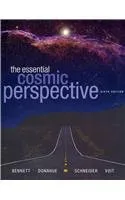
The Essential Cosmic Perspective, 6th Edition
Jeffrey O. Bennett,Megan Donahue,Nicholas O Schneider,Mark Voit
2010
View book
Book guide and evaluation
0 reviews
Published
pages
views
Introduction to "Workshop on the Origin of the Heavy Elements - Astrophysical Models" The origins of the heavy elements in the universe remain one of the most captivating questions in astrophysics. "Workshop on the Origin of the Heavy Elements - Astrophysical Models" serves as
Before you read
The origins of the heavy elements in the universe remain one of the most captivating questions in astrophysics. "Workshop on the Origin of the Heavy Elements - Astrophysical Models" serves as a comprehensive resource for scientists, researchers, and enthusiasts eager to delve into the foundational processes and modern interpretations of how elements beyond hydrogen and helium came into existence. Through deep exploration of theoretical models, observational evidence, and computational techniques, this book offers a thoroughly engaging journey into the cosmic phenomena that drive nucleosynthesis and chemical evolution, addressing both historical foundations and cutting-edge advancements.
Written by a panel of leading experts in astrophysics, nuclear physics, and cosmology, this book compiles insights from an interdisciplinary workshop that brought together some of the brightest minds in the field. It highlights the complexity and diversity of the astrophysical sites—ranging from supernovae to neutron-star mergers—that contribute to enriching the universe with heavy elements essential for life as we know it. From foundational concepts to state-of-the-art models, it presents an authoritative and accessible guide for academics and researchers at every level.
Spanning a wide range of topics, this book outlines a methodical journey through the origins of the heavy elements. Chapter by chapter, readers are introduced to all key aspects of nucleosynthesis, beginning with its historical context, conceptual breakthroughs, and early observational evidence. Attention is given to the essential role of stellar physics, detailing the processes of fusion that lead to the formation of heavier nuclei in stellar interiors.
The book then transitions into discussions of astrophysical sites where conditions allow for rapid (r-process) and slow (s-process) neutron captures, with dedicated focus on explosive events like supernovae, neutron-star mergers, and kilonovae. Computational modeling plays a significant role throughout, as the authors highlight advancements in numerical simulations and their contributions to understanding the physical dynamics of nucleosynthesis in extreme environments.
Key themes include the interplay between nuclear physics and astrophysics, the role of isotopic abundances in tracing element formation, and the application of elemental signatures to study galactic chemical evolution. A significant portion is also devoted to observational techniques, from spectroscopy of ancient stars to isotopic measurements in meteoritic samples, demonstrating how cutting-edge tools provide critical constraints on theoretical models. In addition, the text discusses the implications of these studies for broader scientific questions, such as the formation of galaxies and the development of habitable planets.
"The creation of gold and platinum isn’t just a story of cosmic abundance—it’s the result of collisions between some of the densest objects in the universe."
"Understanding nucleosynthesis is not just an astronomer’s endeavor. It is the story of how nature transitions from simplicity to complexity, from subatomic particles to the intricate chemistry of life itself."
The importance of this book lies in its ability to bridge the gap between academia and scientific curiosity, making cutting-edge discoveries accessible to both specialists and a broader scientific audience. The questions tackled here—concerning the origin of elements essential to the building blocks of the universe—are not only fundamental to the field of astrophysics but deeply intertwined with our understanding of existence itself.
By consolidating contributions from multiple disciplines, the book highlights the interdisciplinary nature of problems in modern science. It encourages collaborative thinking between nuclear physicists, astrophysicists, and cosmologists to address some of the most significant mysteries about our universe’s evolution. The synthesis provided here goes beyond the technical, fostering a deeper appreciation for how the cosmos connects to the very elements essential to life and the physical world around us.
Whether you are a dedicated researcher, an educator, or simply a lover of science, this book offers a well-rounded, richly detailed, and thoroughly enjoyable exploration of one of humanity's biggest questions: where does everything come from?
Your question is answered in the context of this title and author. Each answer uses 2 points.
0 reviews, 3.5 average out of 5
Sign in to publish a review.
Ask a focused question and learn from the community.
Related references that continue this learning path.
Jeffrey O. Bennett,Megan Donahue,Nicholas O Schneider,Mark Voit
Jørgen Christensen-Dalsgaard (auth.),M. T. V. T. Lago,A. Blanchard (eds.)