

Book guide and evaluation
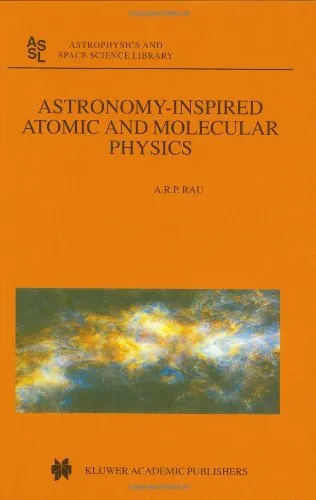
Astronomy-Inspired Atomic and Molecular Physics
A. R. P. Rau (auth.)
English
Beginner
Art
4.7 / 5
0 reviews
2003
Published
252
pages
526
views
Introduction In a universe characterized by its boundless complexity and infinite wonders, the intersection of astronomy with atomic and molecular physics opens an exciting gateway to understanding the fundamental nature of the cosmos. "Astronomy-Inspired Atomic and Molecu
Before you read
What will you get from this book?
Introduction
In a universe characterized by its boundless complexity and infinite wonders, the intersection of astronomy with atomic and molecular physics opens an exciting gateway to understanding the fundamental nature of the cosmos. "Astronomy-Inspired Atomic and Molecular Physics" is an exploration into how the microscopic scales of atoms and molecules connect with the macroscopic phenomena observed in the universe.
Detailed Summary of the Book
In this comprehensive volume, the author delves into the intricate details of atomic and molecular phenomena that are inspired and driven by astronomical observations. Each chapter meticulously covers key concepts that bridge the gap between quantum mechanics and cosmic-scale observations. Topics range from the quantum characteristics of atoms affected by cosmic phenomena to the role of molecular interactions in the formation of stellar and planetary structures. By examining the building blocks of matter in the context of astronomy, the book reveals how even the tiniest quantum mechanical oddities can have profound implications for planetary systems and star formation. The text guides readers through a journey across various interdisciplinary themes, encapsulating the quintessence of how small-scale physics is inseparable from, and indeed crucial to, the grandeur of the heavens.
Key Takeaways
- Understanding the quantum mechanics behind atomic and molecular interactions provides crucial insights into astronomical phenomena.
- Collisions and interactions at the atomic level are pivotal for the dynamics observed in bigger cosmic systems.
- Astrophysical phenomena such as star formation, planetary atmospheres, and interstellar media are fundamentally linked to atomic processes.
- The interplay between electromagnetic radiation and atomic structures helps decode astronomical data.
- Technological advances in astronomy often depend on our knowledge of atomic and molecular physics, demonstrating a symbiotic relationship between the fields.
Famous Quotes from the Book
"In the dance of atoms and molecules, we uncover the music of the spheres, a harmony that extends across unimaginable scales of space and time."
"Every photon, born in the heart of a star or scattered in the vastness of space, carries with it the secrets of atomic processes."
Why This Book Matters
"Astronomy-Inspired Atomic and Molecular Physics" is crucial reading for aspiring astronomers and physicists alike due to its unique interdisciplinary perspective. By marrying the worlds of atomic physics and astronomy, the book broadens our understanding of how the principles governing the smallest components of matter influence the vastness of space. It challenges readers to rethink conventional boundaries, promoting a rich, unified view of physics. The insights offered are not just academic; they hold key importance for advancing technologies such as spectroscopy and satellite imaging, which rely heavily on atomic data. As such, this work is not only a bridge between scientific disciplines but a cornerstone for future exploration and discovery in understanding the universe.
Ask this book
Your question is answered in the context of this title and author. Each answer uses 2 points.
Sign in to ask the book assistant.
Reader reviews
0 reviews, 4.7 average out of 5
No reviews yet
If you have read this book, help the next reader with your experience.
Write a review
Sign in to publish a review.
Reader questions and answers
Ask a focused question and learn from the community.
Sign in to ask or answer a question.
No questions yet
Be the first to ask a clear, useful question.
What to read next
Related references that continue this learning path.

Elementary Excitations in Solids, Molecules, and Atoms: Part A
P. W. Anderson (auth.),Jozef T. Devreese,A. B. Kunz,T. C. Collins (eds.)
1974
View book
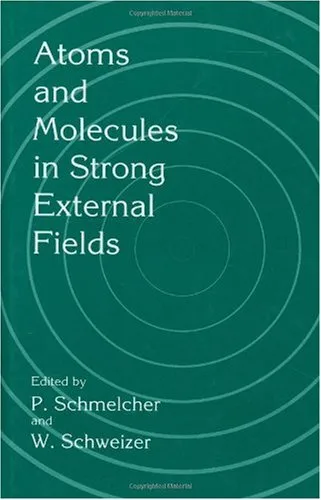
Atoms and Molecules in Strong External Fields (Proc. 172nd WE-Heraeus Seminar, Bad Honnef 1997)
P. Schmelcher,W. Schweizer
1998
View book