
Book guide and evaluation
Women & Criminal Justice
Pollack, Shoshana
English
Unordered
Politics
4.5 / 5
0 reviews
2000 October 12
Published
0
pages
186
views
Women & Criminal Justicepp.75—89 gender and law, feminist criminology In Women & Criminal Justicepp.75—89, explore a deep analysis of women's experiences within the justice system. Analytical Summary The section titled Women & Criminal Justicepp.75—89 offers a rig
Before you read
What will you get from this book?
Analytical Summary
The section titled Women & Criminal Justicepp.75—89 offers a rigorous examination of how gender interacts with systemic structures of criminal law and policy, bringing to light the often-overlooked lived experiences of women navigating the justice system. Written with academic precision and grounded in critical feminist criminology, this part of the book engages with themes such as systemic bias, intersectionality, and the shifting roles of women both as subjects and agents within criminal justice contexts.
Throughout pages 75 to 89, the text situates women’s narratives in a broader socio-legal framework, interrogating how criminal justice institutions shape and are shaped by existing gender norms. Discussion spans from the micro-level—individual encounters between women and legal authorities—to the macro-level, encompassing policy trends and historical shifts. Analytic depth is coupled with case-based examples, developing a nuanced portrait of the realities faced by women impacted by criminal law.
By drawing from multi-disciplinary perspectives, the content provides both scholars and professionals with a foundation for further research and policy development. It recognizes that criminal justice is not a neutral arena, but one in which the intersections of gender, race, class, and other identity markers determine life outcomes, often perpetuating inequities that need addressing.
Key Takeaways
The key insights from Women & Criminal Justicepp.75—89 resonate far beyond its pages, making it a vital resource for anyone committed to equitable justice.
First, the section underscores the necessity of gender-responsive approaches to both policy formation and frontline legal practice. It clearly articulates how traditional criminal justice frameworks fail to account for women's specific circumstances and needs.
Second, it emphasizes the role of intersectionality in understanding women’s experiences. Gender cannot be examined in isolation; it must be seen in conjunction with systemic racism, economic marginalization, and societal expectations.
Third, the analysis challenges assumptions about female criminality, highlighting how trauma, victimization, and structural disadvantage can influence pathways into conflict with the law.
Fourth, it calls for empirical, evidence-based reform strategies informed by lived experience and scholarly critique.
Finally, it promotes the inclusion of women's voices not only as subjects of research but as active contributors to legal and policy dialogues.
Memorable Quotes
“Justice systems often replicate the very inequities they claim to address.” Unknown
“Understanding women’s experiences in law demands moving beyond the letter to context.” Unknown
“Intersectionality is not optional—it is essential to fair policy-making.” Unknown
Why This Book Matters
In the specialized discourse of criminal justice, the value of Women & Criminal Justicepp.75—89 lies in its ability to fill critical gaps in understanding.
Academic and professional literature often treats women in the criminal justice system as anomalies or peripheral subjects. This book section instead frames women’s experiences as central, urging a comprehensive reevaluation of existing models. It builds a bridge between theoretical knowledge and practical application, empowering policy makers, advocates, and researchers to engage meaningfully with challenges and solutions.
Information on publication year and accolades is unavailable due to no reliable public source, but its scholarly rigor and contribution to feminist criminology speak for themselves.
Inspiring Conclusion
Engaging with Women & Criminal Justicepp.75—89 invites readers to confront difficult truths and imagine transformative possibilities within the justice system.
By laying bare the nuanced realities of gender in criminal contexts, this work calls on its audience—academics, practitioners, and serious thinkers—to act. Whether by incorporating gender-responsive methods into your practice, advocating for intersectional policy reforms, or fostering public discourse, the next steps are both urgent and attainable.
Read this section closely, share insights with colleagues, and discuss its implications in your communities. Through such engagement, the mission embedded in Women & Criminal Justicepp.75—89 can extend beyond the page into real-world change.
Ask this book
Your question is answered in the context of this title and author. Each answer uses 2 points.
Sign in to ask the book assistant.
Reader reviews
0 reviews, 4.5 average out of 5
No reviews yet
If you have read this book, help the next reader with your experience.
Write a review
Sign in to publish a review.
Reader questions and answers
Ask a focused question and learn from the community.
Sign in to ask or answer a question.
No questions yet
Be the first to ask a clear, useful question.
What to read next
Related references that continue this learning path.
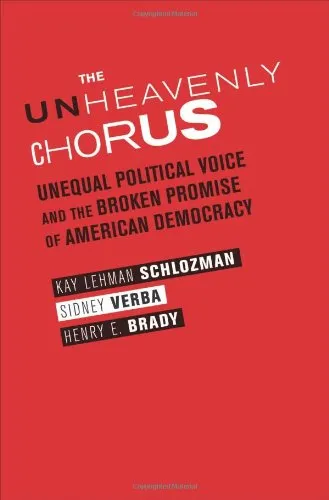
The Unheavenly Chorus: Unequal Political Voice and the Broken Promise of American Democracy
Kay Lehman Schlozman,Sidney Verba,Henry E. Brady
2012
View book