Book guide and evaluation
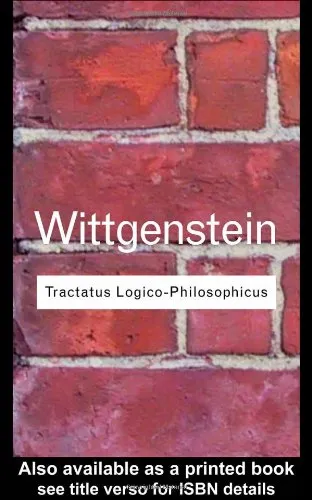
Wittgenstein's Tractatus logico-philosophicus: reader's guide
White,Roger M
English
Beginner
Logic and Foundations
4.0 / 5
0 reviews
2006
Published
172
pages
791
views
Wittgenstein's "Tractatus Logico-Philosophicus" has long been considered one of the most influential philosophical works of the 20th century. In 'Wittgenstein's Tractatus Logico-Philosophicus: Reader's Guide,' author Roger M. White offers a comprehensive and accessible examin
Before you read
What will you get from this book?
Wittgenstein's "Tractatus Logico-Philosophicus" has long been considered one of the most influential philosophical works of the 20th century. In 'Wittgenstein's Tractatus Logico-Philosophicus: Reader's Guide,' author Roger M. White offers a comprehensive and accessible examination of this groundbreaking text. This reader's guide demystifies Wittgenstein's dense, enigmatic propositions and provides readers with the tools to understand his philosophical vision.
Detailed Summary of the Book
Within this reader's guide, White explores the key concepts and propositions of the "Tractatus," a work where Wittgenstein strives to define the relationship between language and reality. The book meticulously unpacks Wittgenstein's notion that the structure of language mirrors the structure of reality, allowing language to express facts about the world. Each section of the guide corresponds to Wittgenstein's original propositions, offering detailed commentary and analysis. White sheds light on Wittgenstein's argument that philosophical problems arise from misunderstandings of the logical structure of language, and he delineates the limits of language that Wittgenstein so famously identifies. This structured approach immerses the reader in Wittgenstein's logical and philosophical inquiries, showing how the propositions build towards his overarching thesis: what can be said at all can be said clearly, and what we cannot talk about must be passed over in silence.
Key Takeaways
The key takeaways from 'Wittgenstein's Tractatus Logico-Philosophicus: Reader's Guide' include an understanding of the profound impact the "Tractatus" had on analytic philosophy, particularly on thoughts about the philosophy of language and logic. Readers will grasp the significance of Wittgenstein's picture theory of language, where language functions as a "picture" of reality, reflecting states of affairs. Another crucial takeaway is the demarcation Wittgenstein establishes between what can be expressed in language (facts) and what lies beyond linguistic articulation (values, ethics, the mystical). The guide emphasizes the importance of recognizing these boundaries in philosophical discourse and everyday language.
Famous Quotes from the Book
In his analysis, White frequently references some of the most famous passages from the "Tractatus," including Wittgenstein's concluding proposition: "Whereof one cannot speak, thereof one must be silent." This resonates as a guiding principle throughout both the "Tractatus" and Wittgenstein's career. Another significant quote explored in this guide is the opening line: "The world is all that is the case," setting the stage for Wittgenstein's exploration of how language correlates with facts.
Why This Book Matters
'Wittgenstein's Tractatus Logico-Philosophicus: Reader's Guide' is vital for students of philosophy, linguistics, and anyone interested in the evolution of 20th-century thought. White's guide is not merely a summary but a critical engagement with Wittgenstein's text, rendering it accessible to a wider audience. It serves to bridge the gap between Wittgenstein's abstract theorizing and practical philosophical inquiry, showcasing how his ideas have shaped modern attitudes towards language and meaning.
By unpacking the "Tractatus" in detail, White illuminates why Wittgenstein's work remains relevant in discussions ranging from logical positivism to contemporary debates about the limits of language. White provides readers with a foundation to explore further the implications of Wittgenstein's work, inviting them to reflect on the nature of language, reality, and the ineffable.
Ask this book
Your question is answered in the context of this title and author. Each answer uses 2 points.
Sign in to ask the book assistant.
Reader reviews
0 reviews, 4.0 average out of 5
No reviews yet
If you have read this book, help the next reader with your experience.
Write a review
Sign in to publish a review.
Reader questions and answers
Ask a focused question and learn from the community.
Sign in to ask or answer a question.
No questions yet
Be the first to ask a clear, useful question.
What to read next
Related references that continue this learning path.