Book guide and evaluation
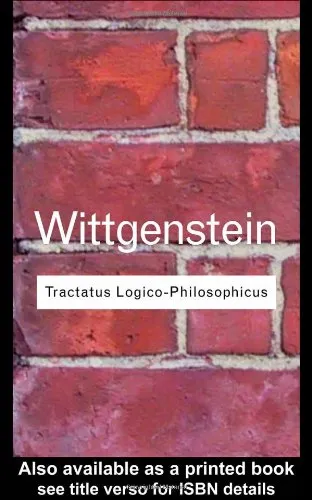
Tractatus Logico-Philosophicus
Ludwig Wittgenstein
English
Beginner
Logic and Foundations
4.5 / 5
0 reviews
2001
Published
134
pages
525
views
Introduction to the Tractatus Logico-Philosophicus The 'Tractatus Logico-Philosophicus' is a rigorous and enigmatic work of philosophy by Ludwig Wittgenstein, which deals with the logical structure of language and reality. As one of the most influential philoso
Before you read
What will you get from this book?
Introduction to the Tractatus Logico-Philosophicus
The 'Tractatus Logico-Philosophicus' is a rigorous and enigmatic work of philosophy by Ludwig Wittgenstein, which deals with the logical structure of language and reality. As one of the most influential philosophical texts of the 20th century, it challenges readers to consider the limits of language and thought. This introduction aims to provide an in-depth overview of the book, key insights, memorable quotes, and its importance in the field of philosophy.
Summary of the Book
The 'Tractatus Logico-Philosophicus' presents a philosophical system that explores the relationship between language, reality, and thought. The book is structured as a series of succinct propositions, each numbered to reflect their logical importance and complexity. Wittgenstein's primary argument is that the structure of language mirrors the structure of reality, leading to the conclusion that what can be said at all can be said clearly, and what we cannot talk about must be passed over in silence.
Wittgenstein begins by declaring that the world consists of a totality of facts, not things, and these facts are logically structured. He explores the ways language functions to represent facts, delving into the logical symbolism that underpins meaningful statements. The core idea of logical atomism is presented, proposing that statements about the world can be broken down into atomic propositions that correspond directly with atomic facts.
As the text unfolds, Wittgenstein meticulously investigates the nature of logic, belief, and the limits of human knowledge. The 'Tractatus' concludes with the famous aphorism, "What we cannot speak about we must pass over in silence," highlighting the boundaries of philosophical inquiry and the ineffable nature of certain human experiences.
Key Takeaways
- The structure of language reflects the structure of reality.
- Language can only represent facts; it cannot express what lies beyond factual discourse.
- Logic is inherent in language and forms the limits of what can be understood and expressed.
- Ethical and metaphysical statements, being beyond the realm of verifiable facts, are nonsensical in terms of logical discourse, but they hold value beyond the propositional language.
Famous Quotes from the Book
"The limits of my language mean the limits of my world."
"What we cannot speak about we must pass over in silence."
"A proposition is a picture of reality."
Why This Book Matters
The 'Tractatus Logico-Philosophicus' is fundamentally significant due to its profound influence on both analytical philosophy and the development of logical positivism. Wittgenstein's insights into the nature of language and reality paved the way for future philosophical inquiries and influenced thinkers like Bertrand Russell, who recognized the treatise's groundbreaking exploration of logic and language.
The book's exploration into the limits of language and the nature of meaning set the stage for later philosophical discourse, especially those addressing the philosophy of language and mind. Wittgenstein's pivotal distinction between what can be shown versus what can be said continues to spark rigorous debate and ongoing investigation, making the 'Tractatus' a cornerstone in the study of philosophy.
Ask this book
Your question is answered in the context of this title and author. Each answer uses 2 points.
Sign in to ask the book assistant.
Reader reviews
0 reviews, 4.5 average out of 5
No reviews yet
If you have read this book, help the next reader with your experience.
Write a review
Sign in to publish a review.
Reader questions and answers
Ask a focused question and learn from the community.
Sign in to ask or answer a question.
No questions yet
Be the first to ask a clear, useful question.
What to read next
Related references that continue this learning path.
Word and Object
Willard Van Orman Quine,Dagfinn Føllesdal (Preface),Patricia Smith Churchland (Foreword)
2013
View book