
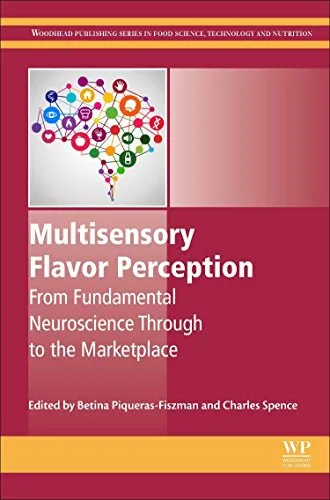
Multisensory Flavor Perception: From Fundamental Neuroscience Through to the Marketplace
Betina Piqueras-Fiszman,Charles Spence
2016
View book
Book guide and evaluation
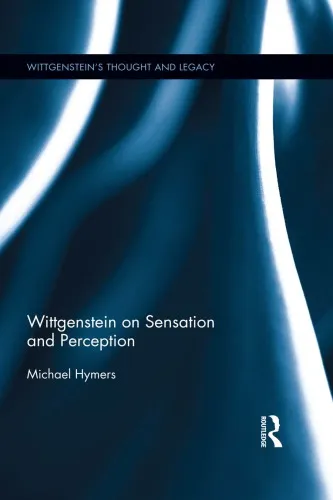
Hymers,Michael
0 reviews
Published
pages
views
Welcome to the intricate exploration of Ludwig Wittgenstein's philosophical perspectives on sensation and perception. In 'Wittgenstein on Sensation and Perception', we delve into the profoundly influential yet complex work of one of the 20th century's most notable philosopher
Before you read
Welcome to the intricate exploration of Ludwig Wittgenstein's philosophical perspectives on sensation and perception. In 'Wittgenstein on Sensation and Perception', we delve into the profoundly influential yet complex work of one of the 20th century's most notable philosophers. This book offers a comprehensive analysis and interpretation of Wittgenstein's thoughts, enabling both seasoned philosophers and new learners to gain valuable insights.
The book meticulously examines Wittgenstein's philosophical investigations into the realms of sensation and perception, as articulated in his major works, particularly the Philosophical Investigations and the Tractatus Logico-Philosophicus. Wittgenstein challenges traditional notions of how we perceive and sense the world around us, questioning the limits of language and the representation of mental states. Through a series of thought experiments and rigorous analysis, 'Wittgenstein on Sensation and Perception' elucidates his argument that sensation and perception are not merely passive experiences but are actively constructed through our linguistic frameworks.
The book is structured to guide readers through the complex arguments, breaking down intricate ideas into comprehensible segments. The initial chapters provide a foundation in Wittgenstein's early philosophy, while subsequent chapters unravel his later thoughts, illustrating the evolution of his ideas. Through this structured approach, readers can appreciate the transformation of Wittgenstein's thinking over his lifetime.
"The limits of my language mean the limits of my world." - Ludwig Wittgenstein
"Sensations can be a blind spot when language becomes not a tool for describing the world, but a mirror reflecting the upbringing of conceptual grammar."
"It's in the philosophy of the everyday that the grandeur of perception reveals itself not as a sole engagement with the world but as a tightly knit chess game of interactions."
This book is more than a mere academic exploration; it provides readers with critical tools to navigate and question the often-unquestioned assumptions about human cognition and experience. Wittgenstein's challenge to traditional epistemological notions of sensation and perception prompts readers to re-evaluate how language and perception interplay in our understanding of reality. By offering an in-depth analysis of Wittgenstein's philosophy, this book serves as an essential resource for students of philosophy as well as anyone interested in the intricate relationships between mind, language, and world.
Furthermore, 'Wittgenstein on Sensation and Perception' is an essential read for anyone aiming to grapple with contemporary debates in philosophy of mind, cognitive science, and linguistics. The book not only sheds light on historical philosophical discourse but also provides a timeless discussion that resonates with current philosophical inquiries.
Your question is answered in the context of this title and author. Each answer uses 2 points.
0 reviews, 4.8 average out of 5
Sign in to publish a review.
Ask a focused question and learn from the community.
Related references that continue this learning path.
Betina Piqueras-Fiszman,Charles Spence

Georg Wilhelm Friedrich Hegel


Zhenji Zhang,Garma C. C. Chang