Book guide and evaluation
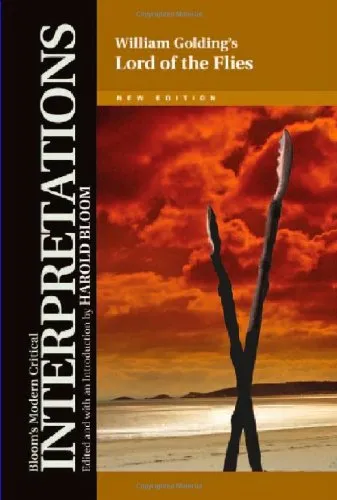
William Golding's Lord of the Flies (Bloom's Modern Critical Interpretations)
Harold Bloom
English
Intermediate
novel
3.8 / 5
0 reviews
2008
Published
185
pages
761
views
Introduction Welcome to the insightful world of William Golding's 'Lord of the Flies', a masterful work that continues to captivate readers and critics alike. As part of the esteemed collection, 'Bloom's Modern Critical Interpretations', this book provides an in-depth explorat
Before you read
What will you get from this book?
Introduction
Welcome to the insightful world of William Golding's 'Lord of the Flies', a masterful work that continues to captivate readers and critics alike. As part of the esteemed collection, 'Bloom's Modern Critical Interpretations', this book provides an in-depth exploration of Golding's fascinating narrative, its themes, and its enduring significance. Designed to serve both academic scholars and passionate readers, this introduction unravels the layers of meaning in one of literature's most enduring classics.
Detailed Summary of the Book
William Golding's 'Lord of the Flies' is a compelling tale of human nature's complexities, set on a deserted island where a group of boys have crash-landed during a war. In their attempt to govern themselves, the boys' societal structure deteriorates, revealing the dark undercurrents of human instincts. Golding deftly explores themes of civilization versus savagery, the loss of innocence, and inherent human evil. The novel opens with Ralph and Piggy, two of the boys, discovering a conch shell that they use to summon the others. As the narrative unfolds, characters like Jack, Simon, and Roger enter the scene, each representing different aspects of society and human morality. The island transforms from a paradise into a battleground, ultimately engulfed in chaos as the boys' primal instincts overshadow their learned behaviors.
Key Takeaways
Golding's 'Lord of the Flies' imparts several profound takeaways:
- The thin veneer of civilization: The novel illustrates how quickly the superficial layers of society can dissolve, revealing the fundamental chaos beneath.
- The innate nature of evil: Golding suggests that evil is an intrinsic human trait, a theme that invites readers to reflect on the darker aspects of the human psyche.
- Leadership and power dynamics: The struggle for power and varying leadership styles depicted in the book provide a microcosm for larger societal structures.
Famous Quotes from the Book
Several memorable quotes from 'Lord of the Flies' encapsulate its key themes:
"Maybe there is a beast… maybe it's only us."
"The thing is - fear can't hurt you any more than a dream."
Why This Book Matters
'Lord of the Flies' holds a significant place in literary and educational circles for a multitude of reasons. Since its publication in 1954, it has sparked intense debate about human nature and societal constructs. A stark depiction of societal failure and moral ambiguity, the novel challenges readers to introspect and critique the foundations of societal norms. Its relevance persists, offering new insights with each reading and reflecting the perennial conflicts between the civilized self and primal instincts. Moreover, Golding's novel paved the way for modern dystopian literature, inspiring numerous writers to explore similar themes of societal breakdown and individual morality.
Audio introductions
Persian Summary
Ask this book
Your question is answered in the context of this title and author. Each answer uses 2 points.
Sign in to ask the book assistant.
Reader reviews
0 reviews, 3.8 average out of 5
No reviews yet
If you have read this book, help the next reader with your experience.
Write a review
Sign in to publish a review.
Reader questions and answers
Ask a focused question and learn from the community.
Sign in to ask or answer a question.
No questions yet
Be the first to ask a clear, useful question.
What to read next
Related references that continue this learning path.