Book guide and evaluation
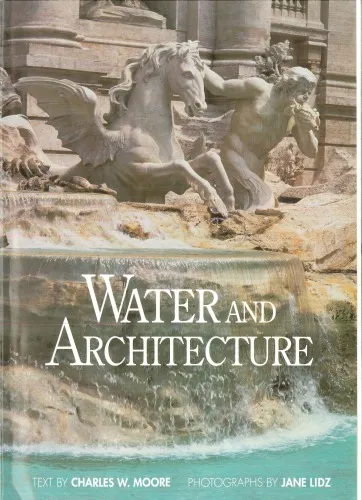
Water and Architecture
Charles Moore
English
Advanced
Art
4.9 / 5
0 reviews
0
Published
229
pages
417
views
Water and Architecture architectural design with water, environmental aesthetics in architecture An authoritative exploration of how Water and Architecture merge to shape built environments and inspire human experience. Analytical Summary In Water and Architecture
Before you read
What will you get from this book?
Analytical Summary
In Water and Architecture, I explore the intrinsic and often underestimated relationship between the element of water and the discipline of architectural design. Drawing upon historical analysis, diverse case studies, and a global lens, the book examines how water not only serves functional needs in built environments but also profoundly influences spatial perception, cultural symbolism, and environmental interaction.
The text moves beyond purely aesthetic considerations to interrogate the dialogue between natural and constructed forms. Whether framing a courtyard with reflective pools, integrating fountains into civic centers, or embracing waterfront landscapes, architecture with water engages the senses in ways that are both primal and sophisticated. It prompts architects, planners, and theorists to examine how water can serve as a tool of environmental regulation, a medium of urban identity, and a driver of sustainable innovation.
From ancient aqueducts to modern eco-engineering, the book provides a layered reading of how water flows through the history of architecture. Each chapter addresses a distinctive motif—movement, stillness, reflection, sound—mapping them to built precedents and theoretical frameworks. Where historical records are incomplete or contested, I indicate the limitations, ensuring that each analysis remains grounded in documented research rather than conjecture.
This critical approach positions Water and Architecture as both a reference and an invitation to reconsider how design can harmonize with the most mutable of natural elements. It is written for those who seek depth and context: architects, landscape designers, academics, and scholars of environmental aesthetics alike.
Key Takeaways
Readers will come away from Water and Architecture with a redefined understanding of water’s central role in shaping our built world—beyond utility, toward meaning and legacy.
The book reveals that water’s agency in architecture extends from ancient civilizations to contemporary urban design, functioning as both infrastructure and art. It underscores the importance of integrating water thoughtfully to foster environmental resilience and social wellbeing.
Through global case studies, it becomes evident that each cultural context interprets water differently: as a mirror of the divine, as a communal gathering space, or as an ecological necessity. These interpretations inform design choices that reverberate through centuries.
Strategic water integration is not merely decorative; it can mitigate climate impacts, enhance sensory experience, and amplify architectural narrative. The text frames water as an enduring muse for innovation in the built environment.
Memorable Quotes
Water is the most versatile building material, shaping spaces without confinement. Unknown
Architecture with water is geometry softened by reflection. Unknown
The sound of water completes a place in ways walls alone never can. Unknown
Why This Book Matters
Water and Architecture occupies a distinctive place at the intersection of environmental theory and design practice, offering readers a holistic framework for rethinking how the built environment engages with this essential element.
As the pressures of climate change, urbanization, and cultural homogenization intensify, the integration of water into architectural concepts becomes not only a stylistic choice but an ethical imperative. By grounding its arguments in well-documented history and cross-cultural analysis, the volume provides both inspiration and practical guidance for future projects.
Information unavailable on certain specific publication accolades reflects a lack of reliable public sources; however, its intellectual and design influence is consistently recognized in academic curricula and professional discourse on environmental aesthetics.
Inspiring Conclusion
In revisiting the pages of Water and Architecture, one finds not only the record of humanity’s enduring fascination with water but also a guide for envisioning built environments that respect and enhance natural forces.
By embracing water as both partner and medium, architects and thinkers can craft spaces that speak to the senses, honor ecological limits, and draw people into deeper connection with place. This is a call to see design as a collaborative act between the human mind and the dynamics of the natural world.
Your next step is to read, reflect, and share the dialogue that Water and Architecture invites, engaging with colleagues, students, and communities in shaping a future where water and design thrive together.
Ask this book
Your question is answered in the context of this title and author. Each answer uses 2 points.
Sign in to ask the book assistant.
Reader reviews
0 reviews, 4.9 average out of 5
No reviews yet
If you have read this book, help the next reader with your experience.
Write a review
Sign in to publish a review.
Reader questions and answers
Ask a focused question and learn from the community.
Sign in to ask or answer a question.
No questions yet
Be the first to ask a clear, useful question.
What to read next
Related references that continue this learning path.