Book guide and evaluation
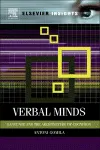
Verbal Minds. Language and the Architecture of Cognition
Antoni Gomila (Auth.)
English
Unordered
Language Learning
4.0 / 5
0 reviews
2011
Published
141
pages
455
views
Introduction to Verbal Minds: Language and the Architecture of Cognition Language is one of the most complex and fascinating abilities humans possess. It’s deeply embedded in our cognition, shaping not only how we communicate but also how we think, perceive, and in
Before you read
What will you get from this book?
Introduction to Verbal Minds: Language and the Architecture of Cognition
Language is one of the most complex and fascinating abilities humans possess. It’s deeply embedded in our cognition, shaping not only how we communicate but also how we think, perceive, and interact with the world. In Verbal Minds: Language and the Architecture of Cognition, I embark on an intellectual journey to explore the interconnections between language and human cognition, diving into how verbal communication emerges, how it functions, and how it influences various dimensions of human thought.
This book presents a comprehensive perspective on the relationship between language and cognition, combining insights from philosophy, cognitive science, linguistics, and psychology. At its core, the argument unfolds around an intriguing premise: that the human mind has not merely adapted to language but has been fundamentally shaped by it. The architecture of our cognition cannot be fully understood unless we consider how language permeates and influences it.
In this introduction, I’ll provide a detailed summary of what readers can expect in the book, highlight some key takeaways, feature a few thought-provoking quotes, and explain why I believe this book matters in the larger context of language studies and cognitive science.
Detailed Summary of the Book
Verbal Minds begins by outlining the significance of language in human evolution. Unlike other species, humans developed a unique capacity for symbolic thought and verbal interaction. This ability has allowed us to share complex ideas, negotiate, and construct societies built on shared understandings. But how exactly did this capacity co-evolve with cognition? And how does it shape who we are today? These are the questions I aim to address.
The book is organized around several key topics. First, it explores the biological and evolutionary foundations of language, offering insights into why language emerged and how it differs from other forms of communication in the animal kingdom. It critically evaluates different theories about the cognitive mechanisms underlying language, challenging some traditional views and proposing alternative interpretations.
From there, the book delves into the interplay between language and other cognitive domains, such as perception, memory, reasoning, and sociality. I argue that language is not a cognitive module that operates independently from other mental capacities; instead, it is a dynamic system that integrates with and transforms our mental architecture. This integration allows for abstract thinking, the construction of mental scenarios, and the ability to reflect on our own thoughts, a process known as metacognition.
The final sections of the book focus on the broader implications of this perspective. If language is foundational to human cognition, what does this mean for artificial intelligence, education, and the philosophy of mind? The book concludes by reflecting on the unique characteristics of verbal minds and the challenges these pose for understanding both the mind and language in their entirety.
Key Takeaways
- Language is not merely a tool for communication; it shapes how we think and perceive the world.
- The evolution of language is tightly linked to the evolution of human cognition itself.
- Language influences not only abstract reasoning but also basic sensory experiences like perception and memory.
- Understanding the architecture of cognition requires examining how language integrates with other mental capacities.
- Rethinking language as a transformative force within cognition has implications for philosophy, artificial intelligence, and other fields.
Famous Quotes from the Book
"Language is not merely a product of cognition but a force that redefines the architecture of the cognitive mind."
"To understand human thought without understanding language is like trying to grasp the essence of music without ever listening to a symphony."
"In the intricate dance of human evolution, language was not just a partner but the guiding rhythm to which cognition adapted."
Why This Book Matters
In a world where we often take language for granted, Verbal Minds serves as a compelling reminder of its profound role in shaping who we are. The book takes an interdisciplinary approach, bridging gaps between philosophy, linguistics, and cognitive science to provide a holistic view of the subject.
What makes this book particularly important is its challenge to traditional viewpoints. Instead of treating language as an isolated skill or a mere means of expression, I argue that it is at the core of what makes us human. By reframing language as a cognitive architect, the book opens up new avenues for research and discussion in fields ranging from psychology to artificial intelligence.
For anyone interested in understanding the human mind, the origins and evolution of language, or the deep connections between communication and cognition, this book is an essential read. It’s not just about uncovering the mechanics of language—it’s about understanding how language defines us.
Ask this book
Your question is answered in the context of this title and author. Each answer uses 2 points.
Sign in to ask the book assistant.
Reader reviews
0 reviews, 4.0 average out of 5
No reviews yet
If you have read this book, help the next reader with your experience.
Write a review
Sign in to publish a review.
Reader questions and answers
Ask a focused question and learn from the community.
Sign in to ask or answer a question.
No questions yet
Be the first to ask a clear, useful question.
What to read next
Related references that continue this learning path.

The Biolinguistic Enterprise: New Perspectives on the Evolution and Nature of the Human Language Faculty
Anna Maria Di SciulloandCedric Boeckx (Editors)
2011
View book