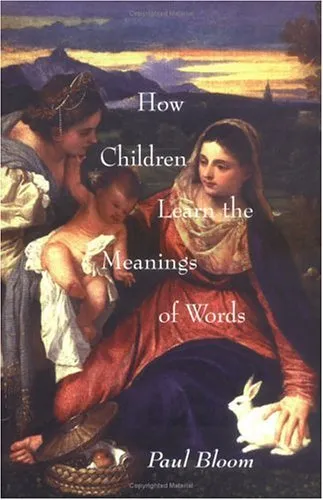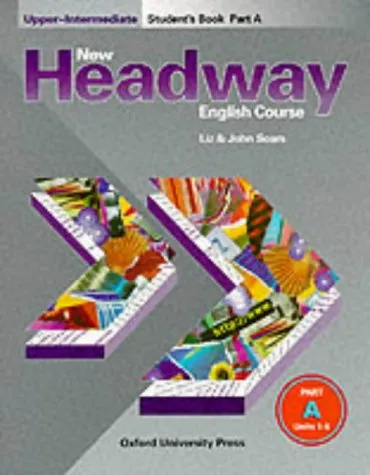
New Headway English Course: Upper Intermediate Student's Book Part A
John Soars,Liz Soars
1998
View book
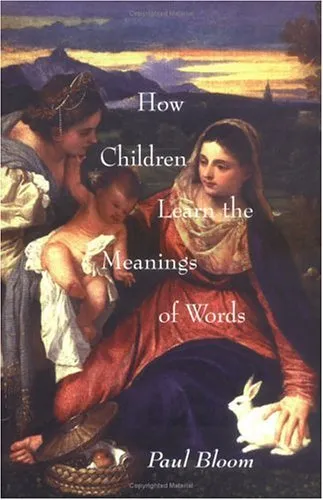
Book guide and evaluation
Paul Bloom
0 reviews
Published
pages
views
Introduction to "How Children Learn the Meanings of Words" Language is one of the hallmarks of human cognition, setting us apart as unique, creative, and social beings. One of its most fascinating mysteries is how children, so young and inexperienced, acquire the incredibl
Before you read
Language is one of the hallmarks of human cognition, setting us apart as unique, creative, and social beings. One of its most fascinating mysteries is how children, so young and inexperienced, acquire the incredible ability to learn words and map them onto the world around them. In "How Children Learn the Meanings of Words," Paul Bloom takes readers on a deep and engaging exploration of this remarkable process, weaving together insights from psychology, linguistics, philosophy, and cognitive science to explain how this aspect of human development unfolds.
As infants grow, they confront a staggering linguistic challenge: making sense of the noisy, ever-changing, and unpredictable speech they hear in their environments. This book delves into the cognitive processes that enable children to attach specific meanings to words, using tools like conceptual understanding, cues from social contexts, and even a rudimentary grasp of syntax. Drawing on years of research and countless experiments, Bloom helps us understand not just the "how" of word learning but also the “why,” uncovering the innate and learned mechanisms that allow language to emerge.
At its core, the book explores the central question of how children acquire word meanings in the first years of life. This process, though seemingly effortless for toddlers, is staggeringly complex and involves multiple layers of cognitive and social abilities.
Bloom begins by addressing the theories that have shaped our understanding of language acquisition. He critiques simplistic models that suggest children merely associate words with objects through repeated exposure. Instead, he proposes a richer, more nuanced approach rooted in the idea that word learning is not merely associative but deeply tied to a child’s broader understanding of human intentions, goals, and the structure of the world around them.
Throughout the book, Bloom examines specific challenges children face when learning new words, such as distinguishing between nouns, verbs, and adjectives, or selecting the correct referent of a new word from an array of possibilities. He also discusses the role of embodiment, syntax, and context, providing evidence to show that children's brains are primed to make sense of input that is vastly ambiguous and incomplete.
By synthesizing experiments, case studies, and theoretical frameworks, "How Children Learn the Meanings of Words" reveals that word learning isn’t simply about repetition or exposure—it’s about inference, categorization, and interaction. The book emphasizes how much children rely on collaboration with caregivers and others in their environment, picking up on social cues and shared attention to refine their understanding of word meanings.
"Children do not merely absorb language like sponges; they are active participants in the process, seeking to make sense of words in a way that aligns with their understanding of the world."
"The acquisition of words is one of the most extraordinary achievements of the human mind, requiring the coordination of perception, cognition, and culture."
"Every word a child learns is not simply a label but a gateway into a richer understanding of the world."
This book is foundational for anyone seeking to understand the science of language acquisition, whether they are linguists, psychologists, educators, or parents. It bridges the gap between highly specialized research and an accessible narrative that offers profound insights into one of the most fascinating features of human development.
By exploring the mechanisms of word learning, Bloom illuminates broader questions about how humans establish shared meaning, engage in social cooperation, and develop complex cognitive abilities. The book also sheds light on how studying children can reveal deep truths about the architecture of the human mind.
Ultimately, "How Children Learn the Meanings of Words" matters because it helps us appreciate the complexity of something we often take for granted: the ability to communicate through language. It challenges us to look at the milestones of word learning not as automatic or inevitable but as a product of remarkable ingenuity, cultural scaffolding, and social interaction.
Your question is answered in the context of this title and author. Each answer uses 2 points.
0 reviews, 4.5 average out of 5
Sign in to publish a review.
Ask a focused question and learn from the community.
Related references that continue this learning path.
John Soars,Liz Soars
Anna Maria Di SciulloandCedric Boeckx (Editors)