
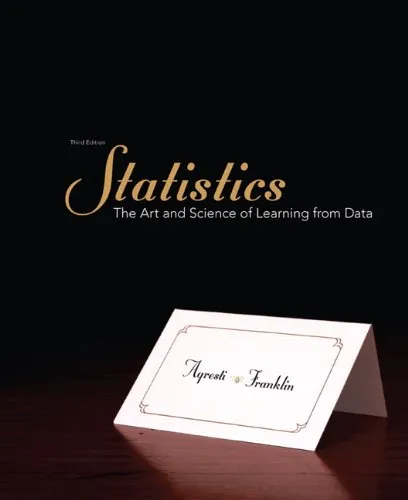
Statistics: The Art and Science of Learning from Data
Alan Agresti,Christine Franklin
2012
View book

Book guide and evaluation
0 reviews
Published
pages
views
Introduction to 'Utility Based Learning from Data' In a world increasingly driven by data, the need to derive actionable insights matters more than ever. 'Utility Based Learning from Data' is a comprehensive guide that dives deep into the nuanced relationship between data scie
Before you read
In a world increasingly driven by data, the need to derive actionable insights matters more than ever. 'Utility Based Learning from Data' is a comprehensive guide that dives deep into the nuanced relationship between data science, decision-making, and measurable utility. This book is designed for anyone wishing to master not just how to analyze data but how to leverage it in a way that optimally aligns with specific goals or utility metrics. Through its thoughtful exploration of theoretical concepts and practical applications, it bridges the gap between abstraction and real-world problem-solving.
At its core, this book is about understanding and applying the concept of "utility" in machine learning and data-driven contexts. It focuses on how data can be used to make decisions that maximize or optimize specific objectives, rather than merely focusing on predictive accuracy or similar metrics. The book progresses from foundational principles of utility theory to sophisticated techniques for integrating these principles into machine learning algorithms.
In the early chapters, readers are introduced to a conceptual framework for utility-based learning, covering key topics like utility curves, trade-offs, and risk management. Building on this foundation, intermediate chapters cover how traditional machine learning approaches—such as classification, regression, and clustering—can be adapted to maximize utility. Advanced sections explore real-world applications, touching on domains such as healthcare optimization, financial decision-making, marketing analytics, and resource allocation in automated systems.
The book is rich with hands-on examples, case studies, and exercises to solidify the reader's understanding. It heavily emphasizes the importance of making decisions that are not just predictive in nature but actionable and impactful in alignment with the user's goals. Whether you are a data scientist, researcher, or business professional, this book serves as a roadmap for transforming data insights into tangible value.
"Predicting the future holds little value unless it’s accompanied by the ability to act effectively."
"Every data point has a story, but not every story is relevant when it comes to maximizing utility."
"Machine Learning is not just about predicting what will happen; it’s about optimizing what should happen."
The explosion of data-driven technologies has created boundless opportunities, but it has also raised critical questions about how to best utilize data for actionable and impactful decision-making. 'Utility Based Learning from Data' addresses these challenges head-on by offering a fresh perspective on how to work with data—not just for understanding trends or making forecasts, but for driving outcomes that matter. This book is perfectly timed for professionals navigating industries where each decision can have far-reaching economic or societal consequences.
Unlike most books in machine learning and data science, which focus heavily on the technical mechanics of algorithms, this book emphasizes the practical relevance of those algorithms in maximizing utility. Concepts such as personalized customer targeting, cost-effective operations, and outcome-driven healthcare resource optimization find a meaningful place throughout its chapters. By showing readers how to integrate utility theory into their machine learning workflows, this book empowers them to make decisions that truly count.
If you care about making your data work harder for you and optimizing the outcomes that matter most, this book is an essential addition to your library.
Your question is answered in the context of this title and author. Each answer uses 2 points.
0 reviews, 3.8 average out of 5
Sign in to publish a review.
Ask a focused question and learn from the community.
Related references that continue this learning path.
Alan Agresti,Christine Franklin
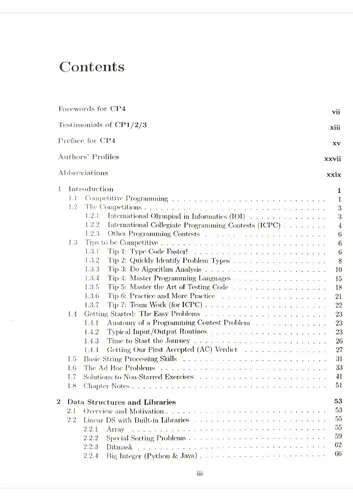
Steven Halim,Felix Halim,Suhendry Effendy

Ralf Schneider,Amit Raj Sharma,Abha Rai (auth.),H. Fehske,R. Schneider,A. Weiße (eds.)