The Neutronium Alchemist: Part I - Consolidation (Neutronium Alchemist)
Peter F. Hamilton
1998
View book
Book guide and evaluation
Jacques Montang
0 reviews
Published
pages
views
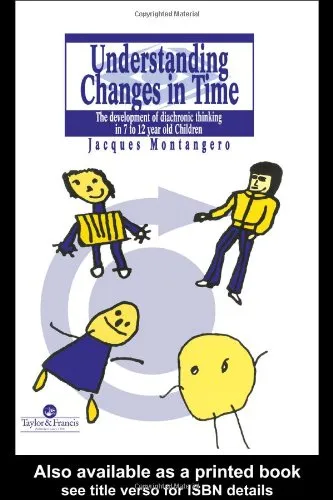
Introduction Welcome to a journey through the cognitive development stages of young minds, specifically focusing on how children between the ages of 7 and 12 understand and interpret changes over time. In 'Understanding Changes In Time: The Development Of Diachronic Thinki
Before you read
Welcome to a journey through the cognitive development stages of young minds, specifically focusing on how children between the ages of 7 and 12 understand and interpret changes over time. In 'Understanding Changes In Time: The Development Of Diachronic Thinking In 7-12 Year Old Children', we explore the intricate processes by which children develop the ability to think diachronically, or in other words, how they comprehend the sequences of past, present, and future events.
The development of diachronic thinking in children is a fascinating subject that combines aspects of psychology, pedagogy, and cognitive science. This book delves into the nuanced processes that children undergo as they begin to grasp chronological concepts. From understanding basic timelines to appreciating historical contexts, children in this age group transition from simple narrations of events to sophisticated temporal reasoning.
Through a series of empirical studies and observational data, the book illustrates how children’s abilities to conceptualize time evolve. It presents age-specific benchmarks and activities designed to enhance diachronic reasoning. Each chapter is anchored in solid theoretical frameworks and enriched with practical applications, empowering educators and parents to support this critical aspect of cognitive development effectively.
"Time not only tells all, but it also helps us understand where we've been and where we're going."
"When children learn to decode the sequences of time, they unlock a new dimension of awareness and responsibility."
Understanding how children think about time is fundamental in fields such as education, psychology, and even history. By optimizing teaching methods to cater to the developing stages of diachronic thinking, educators can significantly enhance the learning experience for young students. This book sheds light on an often-overlooked aspect of cognitive development, providing insights that can lead to more effective educational strategies. Moreover, by grasping how children perceive changes over time, we can better prepare them to face future challenges with a comprehensive understanding of their past experiences and future possibilities.
Your question is answered in the context of this title and author. Each answer uses 2 points.
0 reviews, 4.5 average out of 5
Sign in to publish a review.
Ask a focused question and learn from the community.
Related references that continue this learning path.
Peter F. Hamilton

Simon J. Bronner