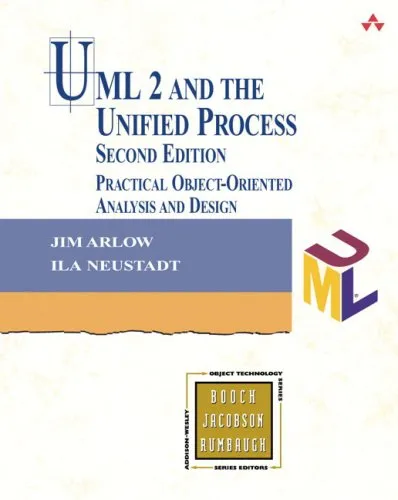
UML 2 and the Unified Process: Practical Object-Oriented Analysis and Design (2nd Edition)
Jim Arlow,Ila Neustadt
2005
View book
Book guide and evaluation
Jim Arlow,Ila Neustadt
0 reviews
Published
pages
views
Welcome to the introduction to "UML and the Unified Process: Practical Object-Oriented Analysis and Design", an essential guide for software engineers, architects, and developers striving to master the principles of object-oriented design and analysis. This comprehensive bo
Before you read
Welcome to the introduction to "UML and the Unified Process: Practical Object-Oriented Analysis and Design", an essential guide for software engineers, architects, and developers striving to master the principles of object-oriented design and analysis. This comprehensive book by Jim Arlow and Ila Neustadt provides a practical, hands-on approach to understanding the intricate connections between the Unified Modeling Language (UML) and the Unified Process (UP). Below, you'll discover a detailed summary of the book, key takeaways, famous quotes, and why this book stands out in the crowded world of technical literature.
"UML and the Unified Process: Practical Object-Oriented Analysis and Design" demystifies complex software engineering principles, presenting them in a reader-friendly and pragmatic way. The book serves as a guide to designing robust, efficient, and maintainable software by combining theoretical underpinnings with practical applications.
The authors introduce the Unified Modeling Language (UML), which has become the de-facto standard for visualizing, specifying, constructing, and documenting software systems. Through this visual language, developers can bridge the gap between requirements and code, leading to clearer communication and significantly reducing misunderstandings between stakeholders and teams.
The Unified Process (UP), at the heart of this book, is a disciplined approach to software development, complete with iterative and incremental practices that help teams manage complex requirements while addressing growing challenges during the software lifecycle. By blending UML with the Unified Process, the book demonstrates how to create software models that align with real-world constraints, are scalable, and support organizational goals.
Furthermore, the narrative incorporates real-world project scenarios, step-by-step modeling techniques, and examples to reinforce key concepts. The book identifies and explains the phases of the Unified Process, such as inception, elaboration, construction, and transition, offering clear workflows and practical exercises that allow readers to immediately apply what they learn.
"Software design is not just about solving problems, but about crafting systems that evolve with time, change, and new demands."
"By bridging the divide between developers and stakeholders, UML creates a universal language that enables clearer thinking and better design."
"The Unified Process is not a recipe, but a flexible framework that adapts to the unique challenges of your project."
In the ever-evolving field of software development, the need for a standardized, methodological approach has become more critical than ever. "UML and the Unified Process: Practical Object-Oriented Analysis and Design" addresses this need with unparalleled clarity and depth. By merging the theoretical elegance of UML with the pragmatic robustness of the Unified Process, the book offers a holistic approach to design and development.
This book matters not just because of its technical insights, but because it translates complex concepts into concepts that are accessible, actionable, and directly relevant to software engineers. It provides a framework that supports modern practices like agile development while allowing teams to manage complexity in real-world projects. Its focus on quality, maintainability, and iterative learning creates a timeless resource that resonates with readers long after they complete it.
Whether you are an experienced software architect looking to refine your practices or a novice developer eager to step into the realm of object-oriented design, this book offers valuable insights that elevate your craft. In essence, it equips you with the tools, techniques, and mindset necessary to tackle the challenges of modern software systems with confidence.
Your question is answered in the context of this title and author. Each answer uses 2 points.
0 reviews, 4.5 average out of 5
Sign in to publish a review.
Ask a focused question and learn from the community.
Related references that continue this learning path.
Jim Arlow,Ila Neustadt