
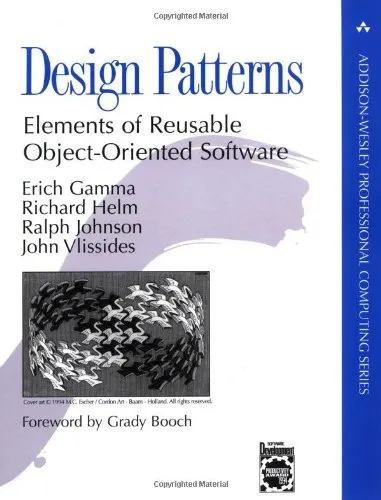
Design Patterns: Elements of Reusable Object-Oriented Software
Erich Gamma,Richard Helm,Ralph Johnson,John M. Vlissides
1994
View book
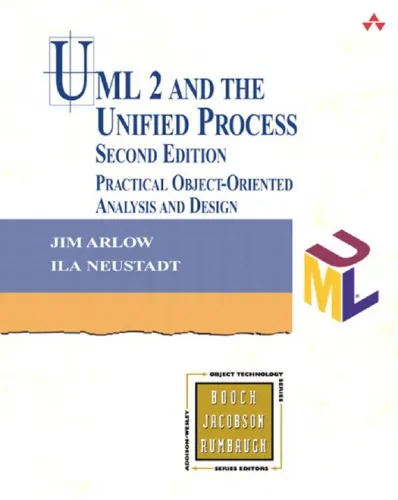
Book guide and evaluation
Arlow, Jim;Neustadt, Ila
0 reviews
Published
pages
views
Introduction Welcome to "UML 2.0 and the Unified Process: Practical Object-Oriented Analysis and Design," a comprehensive guide designed to equip you with the essential knowledge and skills needed to master UML 2.0 and apply it within the framework of the Unified Process
Before you read
Welcome to "UML 2.0 and the Unified Process: Practical Object-Oriented Analysis and Design," a comprehensive guide designed to equip you with the essential knowledge and skills needed to master UML 2.0 and apply it within the framework of the Unified Process. This book is an invaluable resource for software developers, architects, and project managers who wish to leverage UML for effective modeling and design in their software projects.
This book delves deeply into the Unified Modeling Language (UML) version 2.0, which has become the standard for visualizing, specifying, constructing, and documenting the artifacts of a software system. Through a practical approach, it helps readers understand the nuances of object-oriented analysis and design, opening doors to more efficient and manageable software development practices.
The book begins by laying a solid foundation in the core concepts of UML 2.0, exploring its syntax and semantics. It then integrates these technical aspects with the Unified Process, guiding readers through the iterative and incremental methodologies that form the backbone of modern software development. Throughout the book, various case studies and practical examples illustrate the application of theoretical concepts, ensuring that readers can effectively translate knowledge into practice.
"The power of UML lies not just in its ability to communicate design, but in its capacity to illuminate and simplify the often complex realities of software development."
"In the dynamic world of software, adaptability is key. UML 2.0 provides the tools needed to embrace change and stay agile in the face of evolving requirements."
This book serves as a crucial asset to anyone involved in software development and design due to its practical approach and in-depth coverage of UML 2.0. It stands out by seamlessly integrating UML with the Unified Process, offering a structured path through the often complex software development lifecycle. Its practical emphasis goes beyond mere theoretical knowledge, enabling professionals to elevate their design and architecture practices, resulting in more robust and sustainable software systems.
As software systems grow in complexity and scope, the need for effective modeling techniques becomes even more essential. "UML 2.0 and the Unified Process: Practical Object-Oriented Analysis and Design" not only teaches the technical skills necessary to create these models but also fosters the critical thinking required to apply them effectively. By focusing on real-world application, this book ensures that readers are not just passive learners but capable architects ready to tackle the challenges of modern software development.
Persian Summary
Your question is answered in the context of this title and author. Each answer uses 2 points.
0 reviews, 3.7 average out of 5
Sign in to publish a review.
Ask a focused question and learn from the community.
Related references that continue this learning path.
Erich Gamma,Richard Helm,Ralph Johnson,John M. Vlissides
Jim Arlow,Ila Neustadt
Jim Arlow,Ila Neustadt
Arlow, Jim;Neustadt, Ila