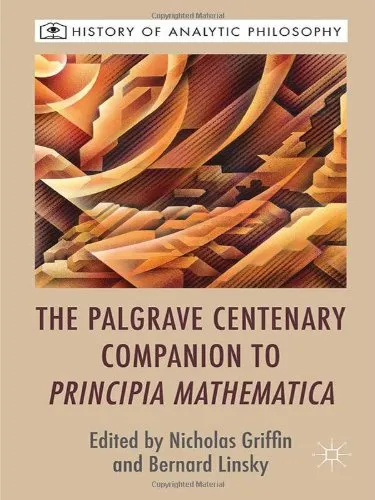
The Palgrave Centenary Companion to Principia Mathematica
Nicholas Griffin,Bernard Linsky
2013
View book
Book guide and evaluation
Stewart Shapiro
0 reviews
Published
pages
views
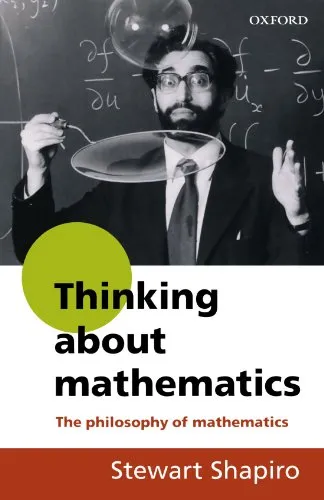
Introduction to 'Thinking About Mathematics: The Philosophy of Mathematics' "Thinking About Mathematics: The Philosophy of Mathematics" by Stewart Shapiro is an insightful exploration into the profound questions that shape the foundations, methods, and implications of math
Before you read
"Thinking About Mathematics: The Philosophy of Mathematics" by Stewart Shapiro is an insightful exploration into the profound questions that shape the foundations, methods, and implications of mathematics. This book serves as a bridge between the technical, analytical domain of mathematics and the philosophical inquiries that underlie its practice. By blending philosophy with mathematics, Shapiro delivers a compelling argument for why understanding the conceptual framework of mathematics is critical for both mathematicians and philosophers.
Written with clarity and depth, the book navigates through a variety of intellectual terrains, such as the nature of mathematical truth, the relationship between mathematics and logic, and the timeless debates surrounding Platonism, formalism, and constructivism. What's remarkable about "Thinking About Mathematics" is its accessibility. Regardless of whether the reader is a seasoned mathematician, an aspiring philosopher, or a curious generalist, Shapiro provides tools and frameworks to untangle the sometimes daunting philosophical challenges of mathematics.
In this introduction, we'll delve into the essential aspects of the book, including a detailed summary, key takeaways, a collection of memorable quotes, and an assessment of its importance in the philosophy of mathematics. Through these sections, you’ll gain a deeper appreciation of what the book offers and why it remains a crucial contribution to the field.
"Thinking About Mathematics" presents a systematic study of the philosophy of mathematics, balancing historical insights with contemporary analysis. The text opens by addressing fundamental questions: What is mathematics? Is it discovered or invented? What gives mathematical truth its certainty?
Shapiro doesn’t limit himself to one perspective. Instead, he surveys a wide range of philosophical schools of thought that have emerged to answer such questions. The book begins with an exploration of classical Platonism — the belief that mathematical objects exist independently of human thought. It then moves to formalism, which views mathematics as a manipulation of symbols governed by rules, and constructivism, which emphasizes the constructive processes of human intellect.
A key focus of the book is its examination of logicism, championed by thinkers like Frege and Russell, which argues that mathematics is reducible to logic. Shapiro also explores the challenges and limitations of this approach, drawing on Gödel’s incompleteness theorems and other landmark results that exposed the limitations of formal systems. Throughout, Shapiro illustrates how mathematics intertwines with broader philosophical concerns, such as epistemology, ontology, and language.
The text also scrutinizes the implications of mathematical practices in science and technology. By discussing how mathematics models the physical world and underpins scientific predictions, Shapiro emphasizes the dual role of mathematics as an abstract, theoretical discipline and a profoundly practical tool.
"Thinking About Mathematics" offers several key takeaways that resonate both within and beyond the academic sphere:
Below are some profound quotes from the book that capture its essence:
"Mathematics is a mirror through which we view the universe, but also a lens through which we examine ourselves."
"To think about mathematics is to think about the very nature of thought itself."
"In studying mathematics, we confront not just abstract patterns but the depth of human creativity and reasoning."
"Thinking About Mathematics" is not merely an academic endeavor; it is a transformative guide to understanding one of humanity’s most significant intellectual achievements. By exposing the philosophical foundations of mathematics, Shapiro offers readers new ways to engage with mathematical ideas, enriching their problem-solving and critical-thinking skills.
This book matters because it bridges the perceived gap between the empirical and the abstract, between the quantitative and the qualitative. In an age where the importance of STEM (Science, Technology, Engineering, and Mathematics) is ever-growing, Shapiro reminds us that the roots of mathematics are deeply philosophical, grounded in questions about existence, logic, and human understanding.
For students of philosophy, the book provides a detailed and approachable introduction to a specialized yet crucial area of study. For mathematicians, it offers a reflective lens on their craft, encouraging them to appreciate the rich conceptual groundwork that makes their work possible. And for general readers, it unlocks the doors to an entirely new way of thinking about the abstract structures that shape the world.
Ultimately, "Thinking About Mathematics" is a must-read for anyone who seeks to understand not only how mathematics works but also why it matters. By the book’s conclusion, readers are not just left with answers but also sparked with meaningful questions about the philosophical and practical dimensions of mathematics.
Your question is answered in the context of this title and author. Each answer uses 2 points.
0 reviews, 4.3 average out of 5
Sign in to publish a review.
Ask a focused question and learn from the community.
Related references that continue this learning path.
Nicholas Griffin,Bernard Linsky

Suzanne Bachelard. Translated by Lester E. Embree
Dobrzeniecki,Marek