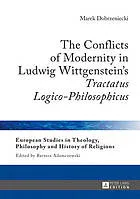
The conflicts of modernity in Ludwig Wittgenstein's Tractatus Logico-Philosophicus
Dobrzeniecki,Marek
2016
View book
Book guide and evaluation
Suzanne Bachelard. Translated by Lester E. Embree
0 reviews
Published
pages
views
Introduction "A Study of Husserl's Formal and Transcendental Logic" by Suzanne Bachelard, eloquently translated by Lester E. Embree, is an insightful examination of one of Edmund Husserl's most complex works. This book delves deeply into the fundamental principles of forma
Before you read
"A Study of Husserl's Formal and Transcendental Logic" by Suzanne Bachelard, eloquently translated by Lester E. Embree, is an insightful examination of one of Edmund Husserl's most complex works. This book delves deeply into the fundamental principles of formal logic while exploring the intricate relationship between logic and phenomenology.
In "A Study of Husserl's Formal and Transcendental Logic," Suzanne Bachelard offers a thorough analysis of Husserl's endeavor to bridge the gap between abstract formal systems and the lived experiences of transcendental subjectivity. Bachelard deftly guides the reader through Husserl's transition from purely formal logic to a transcendental logic, where the foundational structures of logic are examined through the lens of phenomenological evidence.
The book is divided into distinct sections, each tackling different aspects of Husserl's theory. Bachelard begins by contextualizing Husserl's work within the broader history of logic and philosophy, laying the groundwork for a deeper understanding of his purpose. She then meticulously examines the formal structures of logic that Husserl sought to transcend, offering explanatory insights into his methods and goals.
Throughout the text, Bachelard remains faithful to Husserl's original ideas while critically engaging with his concepts. She challenges the reader to consider how formal logical structures influence our understanding of reality and how phenomenology can provide a more profound comprehension of these processes. Through this detailed analysis, Bachelard brings clarity to Husserl's dense philosophical prose and makes a compelling case for the significance of his transcendental logic.
"To grasp the true nature of logical forms, one must turn to the pre-logical realm of subjective acts of consciousness."
"The correlation between transcendental subjectivity and logical forms is the key to unlocking the mysteries of both disciplines."
Suzanne Bachelard's critical examination of Husserl's "Formal and Transcendental Logic" holds significant importance for both scholars of phenomenology and those interested in the philosophy of logic. Husserl's attempt to unite formal logic with transcendental phenomenology has profound implications for how we understand the foundations of knowledge and the processes of reasoning. By elucidating these concepts, Bachelard not only contributes to a richer understanding of Husserl but also to the ongoing discussion about the role of subjective experiences in logical and scientific inquiry.
Her work encourages readers to contemplate the limitations of formal logic when detached from lived experiences and to appreciate the depth that phenomenological perspectives can bring. The insights offered in this book are not just of academic interest but have the potential to influence how logic is taught, understood, and applied in various fields of study.
Ultimately, "A Study of Husserl's Formal and Transcendental Logic" elevates the discourse around logic and phenomenology and serves as a cornerstone for future research and philosophical exploration.
Your question is answered in the context of this title and author. Each answer uses 2 points.
0 reviews, 4.6 average out of 5
Sign in to publish a review.
Ask a focused question and learn from the community.
Related references that continue this learning path.
Dobrzeniecki,Marek
Paul S. Macdonald