English
Advanced
Art
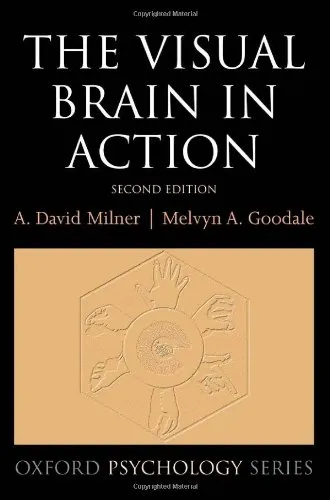
The Visual Brain in Action
A. David Milner,Melvyn A. Goodale
4.5 / 5
0 reviews
2006
Published
320
pages
371
views
First published in 1995, 'The Visual Brain in Action' remains a seminal publication in the cognitive sciences. It presents a model for understanding the visual processing underlying perception and action, proposing a broad distinction within the brain between two kinds of vision:
About this book
First published in 1995, 'The Visual Brain in Action' remains a seminal publication in the cognitive sciences. It presents a model for understanding the visual processing underlying perception and action, proposing a broad distinction within the brain between two kinds of vision: conscious perception and unconscious 'online' vision. It argues that each kind of vision can occur quasi-independently of the other, and is separately handled by a quite different processing system. In the 11 years since publication, the book has provoked considerable interest and debate - throughout both cognitive neuroscience and philosophy, while the field has continued to flourish and develop. For this new edition, the text from the original edition has been left untouched, standing as a coherent statement of the authors' position. However, a very substantial epilogue has been added to the book in which Milner and Goodale review some of the key developments that support or challenge the views that were put forward in the first edition. The new chapter summarizes developments in various relevant areas of psychology, neuroscience and behaviour. It notably supplements the main text by updating the reader on the contributions that have emerged from the use of functional neuroimaging, which was in its infancy when the first edition was written. Neuroimaging, and functional MRI in particular, has revolutionized the field over the past 11 years by allowing investigators to plot in detail the patterns of activity within the visual brains of behaving and perceiving humans. The authors show how its use now allows scientists to test and confirm their proposals, based as they then were largely on evidence accrued from primate neuroscience in conjunction with studies of neurological patients.
Ask this book
Your question is answered in the context of this title and author. Each answer uses 2 points.
Sign in to ask the book assistant.
Reader reviews
0 reviews · 4.5 average out of 5
No reviews yet
If you have read this book, help the next reader with your experience.
Write a review
Sign in to publish a review.
Reader questions and answers
Ask a focused question and learn from the community.
Sign in to ask or answer a question.
No questions yet
Be the first to ask a clear, useful question.
What to read next
Related references that continue this learning path.