Book guide and evaluation
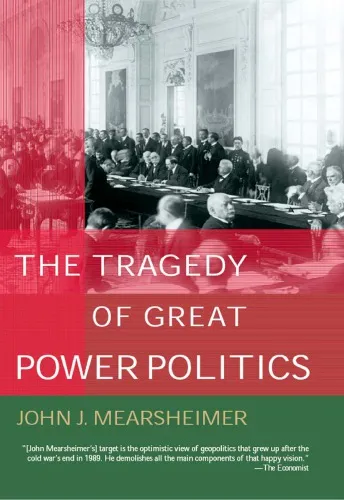
The Tragedy of Great Power Politics
John J. Mearsheimer
English
Intermediate
novel
4.6 / 5
0 reviews
2001
Published
568
pages
624
views
The Tragedy of Great Power Politics: An Introduction "The Tragedy of Great Power Politics" by John J. Mearsheimer offers a compelling examination of international relations through the lens of offensive realism. As one of the pivotal voices in international politics, Mears
Before you read
What will you get from this book?
The Tragedy of Great Power Politics: An Introduction
"The Tragedy of Great Power Politics" by John J. Mearsheimer offers a compelling examination of international relations through the lens of offensive realism. As one of the pivotal voices in international politics, Mearsheimer delves into the inherently anarchic nature of international systems and the resulting ceaseless power struggle among great powers. Through this introduction, we explore the core themes, key takeaways, memorable quotes, and why this work continues to hold significance in understanding global power dynamics.
Detailed Summary of the Book
Published in 2001, "The Tragedy of Great Power Politics" presents the concept of offensive realism, which is rooted in the notion that the anarchic structure of the international system compels states to seek dominance over others as the ultimate means of ensuring their own survival. Mearsheimer argues that because no central authority exists to prevent the use of force by one state against another, great powers are locked in a perpetual struggle to maximize their influence.
Mearsheimer systematically dissects the behavior of states, focusing on how even peaceful nations end up in conflicts due to the compelling logic of power politics. He revisits numerous historical instances, from 19th-century multipolarity to the Cold War, drawing lessons on the innate drive for hegemony. The book illustrates stances like the security dilemma, where the actions of one state to secure itself, unintentionally threaten others, leading to a vicious cycle of mutual suspicion and aggression.
Key Takeaways
1. Power as a Means and an End: Mearsheimer posits that power is pursued not just for security, but often as an end in itself within the global hierarchy.
2. Anarchy Promotes Self-Help: The absence of overarching governance in international politics forces states into self-reliance, heightening the quest for power.
3. Security Dilemma: The increased security of one state inherently reduces the security perceptions of others, perpetuating a state of continuous tension.
4. Inevitability of Competition: Regardless of the intentions of individual states, the structure of international politics breeds perennial competition.
Famous Quotes from the Book
"In the anarchic world of international politics, it is better to be Godzilla than Bambi."
"Great powers are rarely content with the current distribution of power; on the contrary, they strive to maximize their share of world power."
Why This Book Matters
"The Tragedy of Great Power Politics" remains a foundational text in the field of international relations for offering a robust theoretical framework that challenges more idealistic paradigms. Mearsheimer's work is crucial for policymakers, scholars, and students seeking to comprehend the often harsh realities of global power politics. Its insights into the driving forces of state behavior provide a lens through which to view the conflicts and diplomatic strategies that shape our world.
The book challenges readers to confront the uncomfortable realities of international relations and grapples with the tragic aspects of a system that perpetuates conflict despite the often peaceful aspirations of its actors. Understanding this tragedy is vital for devising future strategies that navigate the tumultuous waters of global politics.
Ask this book
Your question is answered in the context of this title and author. Each answer uses 2 points.
Sign in to ask the book assistant.
Reader reviews
0 reviews, 4.6 average out of 5
No reviews yet
If you have read this book, help the next reader with your experience.
Write a review
Sign in to publish a review.
Reader questions and answers
Ask a focused question and learn from the community.
Sign in to ask or answer a question.
No questions yet
Be the first to ask a clear, useful question.
What to read next
Related references that continue this learning path.