Book guide and evaluation
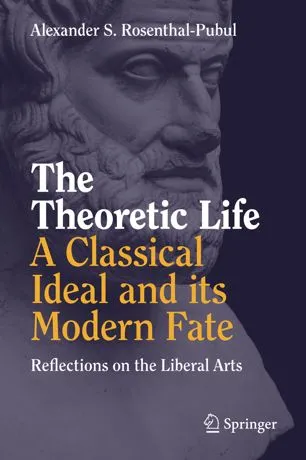
The Theoretic Life - A Classical Ideal and its Modern Fate: Reflections on the Liberal Arts
Alexander S. Rosenthal-Pubul
English
Intermediate
novel
4.7 / 5
0 reviews
2018
Published
171
pages
285
views
In this work, Alexander Rosenthal Pubul presents a broad examination of the ancient philosophical question: “What is the good life?”, while addressing how the liberal arts can help us to answer this question. Greek philosophy distinguished between the “noble” (what is good in its
Before you read
What will you get from this book?
In this work, Alexander Rosenthal Pubul presents a broad examination of the ancient philosophical question: “What is the good life?”, while addressing how the liberal arts can help us to answer this question. Greek philosophy distinguished between the “noble” (what is good in itself), from the merely “useful” (good for something else). From thence follows the distinction between the liberal arts which pursue such noble goods and the mechanical arts which are only instrumental. For Aristotle, the most noble and excellent good is wisdom itself. Hence the theoretic life devoted to the love of wisdom for its own sake –philosophy - is the highest and the most excellent.This work theorizes the origins of modernity in a rebellion against this Greek conception resulting in a complete inversion of the classical hierarchy. Sir. Francis Bacon reconceiving the purpose of knowledge as power, enthroned technology over philosophy and the liberal arts. The unfolding of the modern Baconian revolution progressively sidelines the liberal arts, as practical economic and technical utility become the standard of value. In assessing this problem, the book engages in a capacious journey across disciplines like philosophy, history, art, politics, and science. It is also a veritable tour across the Western intellectual tradition including Socrates, Plato, Aristotle, Cicero, Seneca, Thomas Aquinas, Bacon, Descartes, Hume, Kant, Nietzsche, Dewey, Berdyaev, Einstein, and Heidegger. It pleads the urgent need to preserve the humanizing cultural ideals of the ancient classics against the modern tyranny of utility and the dangers of a new barbarism.
Ask this book
Your question is answered in the context of this title and author. Each answer uses 2 points.
Sign in to ask the book assistant.
Reader reviews
0 reviews, 4.7 average out of 5
No reviews yet
If you have read this book, help the next reader with your experience.
Write a review
Sign in to publish a review.
Reader questions and answers
Ask a focused question and learn from the community.
Sign in to ask or answer a question.
No questions yet
Be the first to ask a clear, useful question.
What to read next
Related references that continue this learning path.
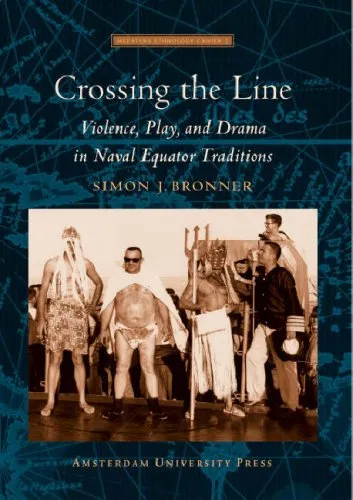
Crossing the Line: Violence, Play, and Drama in Naval Equator Traditions
Simon J. Bronner
2007
View book