
Book guide and evaluation
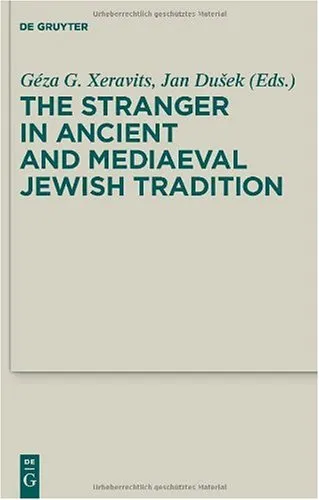
The Stranger in Ancient and Mediaeval Jewish Tradition: Papers Read at the First Meeting of the JBSCE, Piliscsaba, 2009 (Deuterocanonical and Cognate Literature Studies, v.4)
Geza G. Xeravits
English
Intermediate
novel
4.6 / 5
0 reviews
2010
Published
260
pages
332
views
Welcome to an exploration of one of the most nuanced and insightful examinations of the notion of the "stranger" within Jewish tradition, encapsulated in the book The Stranger in Ancient and Mediaeval Jewish Tradition: Papers Read at the First Meeting of the JBSCE, Piliscsaba,
Before you read
What will you get from this book?
Welcome to an exploration of one of the most nuanced and insightful examinations of the notion of the "stranger" within Jewish tradition, encapsulated in the book The Stranger in Ancient and Mediaeval Jewish Tradition: Papers Read at the First Meeting of the JBSCE, Piliscsaba, 2009. This volume, part of the Deuterocanonical and Cognate Literature Studies series, offers a comprehensive survey of how Jewish texts have addressed the role of the stranger — an exploration that spans from ancient to medieval times and sheds light on evolving conceptions within a rich cultural and religious tapestry.
Summary of the Book
The collection of papers in this book was presented at the inaugural meeting of the JBSCE in Piliscsaba in 2009, bringing together scholars from various fields to discuss the representation and treatment of strangers in Jewish literature. The discussions within these papers traverse a historical and cultural landscape that includes biblical origins, interpretations in rabbinic literature, and subsequent dialogues in medieval philosophical thought.
Through these papers, readers are invited into a multifaceted dialogue examining how Jewish communities perceived, interacted with, and were influenced by outsiders. The book delves into significant texts from the Hebrew Bible where the "stranger" appears, as well as interpretations of these themes in deuterocanonical literature, thereby providing a broad spectrum of understanding. This approach not only contextualizes the stranger within Jewish historical experience but also illuminates broader social, ethical, and theological themes.
Key Takeaways
- The concept of the "stranger" is complex, reflecting varied dimensions such as inclusion, exclusion, identity, and empathy within Jewish tradition.
- Historical texts reveal a dynamic interplay between self-identity within Jewish communities and their interactions with non-Jewish others.
- The discussions extend into moral and ethical realms, questioning how societies define their boundaries and exhibit hospitality or hostility towards outsiders.
- Scholarly interpretations reveal both continuity and change in the perception of the stranger, from ancient Israelite society through medieval Jewish thought.
Famous Quotes from the Book
"The stranger holds a mirror up to the community, reflecting its fears and aspirations, challenging its self-understanding."
"In each instance where the stranger appears, we witness the potential for both harmony and discord, revealing much about the society's values."
Why This Book Matters
The exploration of the stranger within Jewish tradition is not just a historical inquiry; it resonates with contemporary discussions about multiculturalism, nationalism, and global migration. This book, with its scholarly depth and breadth, is particularly significant in today's world, where issues of identity and otherness frequently surface in societal debates. The discussions extend beyond the scope of Jewish tradition, offering universal insights into human relations.
The profound coverage and scholarly approach present within this collection make it an indispensable resource for students and scholars of Jewish studies, theology, and history. It allows readers to grasp the complexities and nuances of human interaction with the unknown 'other,' and the resulting implications for culture and society.
Ask this book
Your question is answered in the context of this title and author. Each answer uses 2 points.
Sign in to ask the book assistant.
Reader reviews
0 reviews, 4.6 average out of 5
No reviews yet
If you have read this book, help the next reader with your experience.
Write a review
Sign in to publish a review.
Reader questions and answers
Ask a focused question and learn from the community.
Sign in to ask or answer a question.
No questions yet
Be the first to ask a clear, useful question.
What to read next
Related references that continue this learning path.
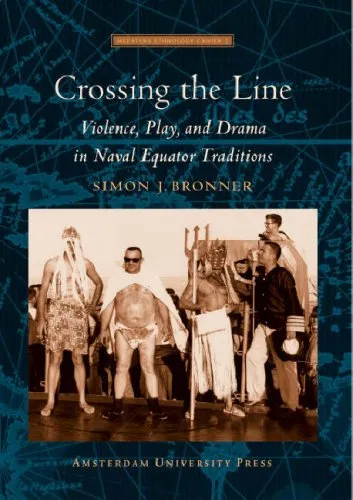
Crossing the Line: Violence, Play, and Drama in Naval Equator Traditions
Simon J. Bronner
2007
View book

Oneida Lives: Long-Lost Voices of the Wisconsin Oneidas (The Iroquoians and Their World)
Herbert S. Lewis,Gerald L. Hill
2005
View book