Book guide and evaluation
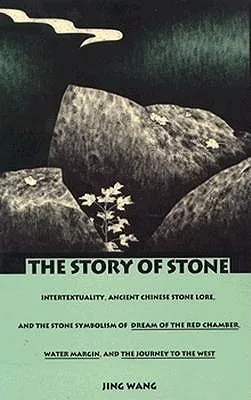
The Story of Stone: Intertextuality, Ancient Chinese Stone Lore, and the Stone Symbolism in Dream of the Red Chamber, Water Margin, and The Journey to the West
Jing Wang;Stanley Fish
English
Intermediate
novel
4.8 / 5
0 reviews
1991
Published
361
pages
508
views
In this pathbreaking study of three of the most familiar texts in the Chinese tradition—all concerning stones endowed with magical properties—Jing Wang develops a monumental reconstruction of ancient Chinese stone lore. Wang’s thorough and systematic comparison of these classic w
Before you read
What will you get from this book?
In this pathbreaking study of three of the most familiar texts in the Chinese tradition—all concerning stones endowed with magical properties—Jing Wang develops a monumental reconstruction of ancient Chinese stone lore. Wang’s thorough and systematic comparison of these classic works illuminates the various tellings of the stone story and provides new insight into major topics in traditional Chinese literature.Bringing together Chinese myth, religion, folklore, art, and literature, this book is the first in any language to amass the sources of stone myth and stone lore in Chinese culture. Uniting classical Chinese studies with contemporary Western theoretical concerns, Wang examines these stone narratives by analyzing intertextuality within Chinese traditions. She offers revelatory interpretations to long-standing critical issues, such as the paradoxical character of the monkey inThe Journey to the West, the circularity of narrative logic inThe Dream of the Red Chamber, and the structural necessity of the stone tablet inWater Margin.By both challenging and incorporating traditional sinological scholarship, Wang’sThe Story of Stonereveals the ideological ramifications of these three literary works on Chinese cultural history and makes the past relevant to contemporary intellectual discourse. Specialists in Chinese literature and culture, comparative literature, literary theory, and religious studies will find much of interest in this outstanding work, which is sure to become a standard reference on the subject.
Ask this book
Your question is answered in the context of this title and author. Each answer uses 2 points.
Sign in to ask the book assistant.
Reader reviews
0 reviews, 4.8 average out of 5
No reviews yet
If you have read this book, help the next reader with your experience.
Write a review
Sign in to publish a review.
Reader questions and answers
Ask a focused question and learn from the community.
Sign in to ask or answer a question.
No questions yet
Be the first to ask a clear, useful question.
What to read next
Related references that continue this learning path.
Crossing the Line: Violence, Play, and Drama in Naval Equator Traditions
Simon J. Bronner
2007
View book