Mohammad Taha Haji Arismani
2024/10/11
5 / 5
Thanks a lot, I wanted this book!
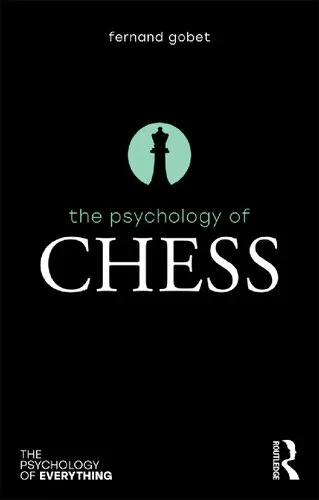
Book guide and evaluation
Fernand Gobet
1 reviews
Published
pages
views
Welcome to the intricate world of chess, where the subtle interplay of strategy, cognition, and psychology unveils itself in fascinating detail. "The Psychology of Chess" by Fernand Gobet is an immersive exploration into the cognitive processes and psychological intri
Before you read
Welcome to the intricate world of chess, where the subtle interplay of strategy, cognition, and psychology unveils itself in fascinating detail. "The Psychology of Chess" by Fernand Gobet is an immersive exploration into the cognitive processes and psychological intricacies that compel and captivate both players and enthusiasts around the globe. This book offers more than a mere surface-level examination of the game; it delves deeply into the minds of those individuals who dedicate themselves to mastering this timeless art. As you journey through these pages, you will uncover the fascinating intersection of psychology and chess, an amalgamation that reveals insights not only pertinent to the game but also applicable to broader aspects of human cognition and performance.
"The Psychology of Chess" embarks on an extensive examination of the cognitive processes exhibited by chess players, ranging from novices to grandmasters. The book systematically explores how various psychological faculties such as memory, perception, and problem-solving skills are harnessed in the context of chess. It presents a detailed analysis of pattern recognition, decision-making, and the role of intuition, illustrating how players mentally engage with the chessboard. By dissecting the psychological aspects of competition and training, the book provides a nuanced understanding of what differentiates an average chess player from a champion. Furthermore, the book delves into historical and cultural influences that have shaped the evolution of chess, offering readers a broader perspective on its status as a global intellectual pursuit.
Chess, while a game of infinite complexity, serves as a mirror to the human mind: revealing strengths, weaknesses, and capacity for creativity.
In the intricate dance of chess, intuition and logic converge, allowing players to glimpse the profound depths of human cognition.
Through chess, one not only learns the art of strategizing but also discovers a deeper understanding of the self.
"The Psychology of Chess" shines a light on the lesser-seen aspects of the game, making it an invaluable resource for players, psychologists, and educators alike. By connecting cognitive psychology with the practical elements of chess, the book contributes to a more holistic understanding of both. It invites readers to reflect on how the skills and insights gained from chess can be transferred to other areas of life, fostering personal growth and intellectual enrichment. The comprehensive research and engaging narrative make it a must-read for anyone interested in the cognitive sciences or the psychological dimensions of human performance. Whether you are a seasoned player seeking to refine your skills or a newcomer curious about the cognitive challenges of the game, "The Psychology of Chess" offers a treasure trove of knowledge and inspiration.
Your question is answered in the context of this title and author. Each answer uses 2 points.
1 reviews, 5.0 average out of 5
2024/10/11
5 / 5
Thanks a lot, I wanted this book!
Sign in to publish a review.
Ask a focused question and learn from the community.
Related references that continue this learning path.