When things fall apart: Qualitative Studies of Poverty in the Former Soviet Union
Dudwick Nora,Comart Elisabeth,Marc Alexandre
2003
View book
Book guide and evaluation
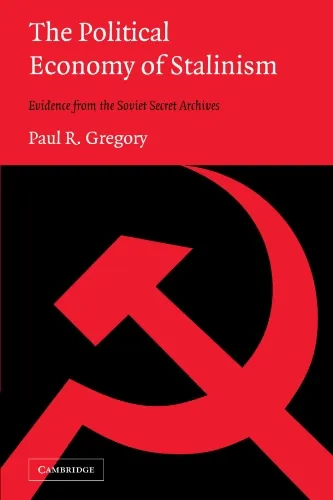
Paul R. Gregory
0 reviews
Published
pages
views
Understanding the inner workings of the Soviet Union during Stalin's era is pivotal for comprehending the broader dynamics of 20th-century political history and economics. "The Political Economy of Stalinism: Evidence from the Soviet Secret Archives" by Paul R. Gregory is an il
Before you read
Understanding the inner workings of the Soviet Union during Stalin's era is pivotal for comprehending the broader dynamics of 20th-century political history and economics. "The Political Economy of Stalinism: Evidence from the Soviet Secret Archives" by Paul R. Gregory is an illuminating book that delves into this enigmatic period, unraveling the complexities of Stalinist governance through meticulous study of secret archives.
Paul R. Gregory's "The Political Economy of Stalinism" presents a profound exploration of Joseph Stalin's Soviet Union, particularly focusing on its economic logistics, governance, and the socio-political fabric that held it all together. Utilizing declassified Soviet archives, the book offers a rare glimpse into a tightly controlled system, characterized by its highly centralized planning, command economy, and brutal enforcement mechanisms.
Throughout the book, Gregory outlines how economic decisions during Stalin's reign were less about efficiency and more about consolidating power and ensuring ideological adherence. The author reveals the intricate balance between industry leaders and political elites, who were often in a constant power struggle to maintain control and favor from Stalin himself. The book traces the decision-making processes that led to pivotal economic policies, and uses real archival evidence to showcase how these processes were dictated by often arbitrary and dangerously whimsical rules.
The book also explores how Stalin's economic model ultimately laid the groundwork for both the strengths and weaknesses of the Soviet Union well into its later years, significantly affecting global geopolitics.
"Stalin's economic policies were less a miracle of planning and more a testament to the coercive force of the state."
"The personal feuds and ideological battles within the Soviet elite were waged not just with words, but often with devastating consequences for the Soviet citizenry."
"The Political Economy of Stalinism" is significant because it provides an in-depth analysis of how totalitarian regimes operate economically, shedding light on the broader implications for similar systems worldwide. The book is pivotal for scholars of history, economics, and political science, as it not only details Stalin's unmistakable mark on Soviet history but also serves as a cautionary tale about the dangers of authoritarian governance.
By accessing and interpreting exclusive archival documents, Gregory contributes to a more nuanced understanding of a period that has often been shrouded in secrecy and myth. His work challenges previous interpretations of the Soviet economy and provokes a rethinking of the legacy of Stalinist policies.
For anyone interested in understanding the intricate workings of high-level Soviet economics and the political machinations that shaped the lives of millions, Gregory’s book is an invaluable resource that continues to resonate with readers today.
Your question is answered in the context of this title and author. Each answer uses 2 points.
0 reviews, 4.0 average out of 5
Sign in to publish a review.
Ask a focused question and learn from the community.
Related references that continue this learning path.
Dudwick Nora,Comart Elisabeth,Marc Alexandre

Florence Scovel Shinn,Chris Gentry (editor)