
When things fall apart: Qualitative Studies of Poverty in the Former Soviet Union
Dudwick Nora,Comart Elisabeth,Marc Alexandre
2003
View book
Book guide and evaluation
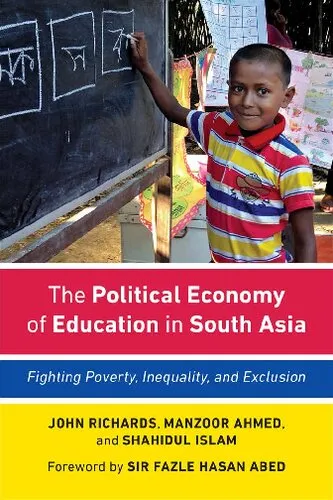
John Richards,Manzoor Ahmed,Md. Shahidul Islam
0 reviews
Published
pages
views
Introduction to "The Political Economy of Education in South Asia: Fighting Poverty, Inequality, and Exclusion" Education is undeniably one of the pivotal pillars for societal progress and personal advancement. In the context of South Asia, this pillar is not only a beacon
Before you read
Education is undeniably one of the pivotal pillars for societal progress and personal advancement. In the context of South Asia, this pillar is not only a beacon of opportunity but also a battleground against entrenched poverty, glaring inequalities, and systemic exclusion. "The Political Economy of Education in South Asia: Fighting Poverty, Inequality, and Exclusion" is an incisive exploration led by authors John Richards, Manzoor Ahmed, and Md. Shahidul Islam. Together, they delve into the multifaceted challenges and prospects of education systems in this rapidly transforming region.
This book provides an exhaustive analysis of the educational landscape in South Asia, focusing on the intricate interplay between political, economic, and social forces that shape policies and practices. The authors meticulously dissect how these forces contribute to ongoing inequalities and propose solutions aimed at enhancing educational access and quality. The narrative spans multiple countries in South Asia, each with its unique context, yet all grappling with similar issues of inadequate funding, policy shortfalls, and socio-economic barriers. By presenting vivid case studies and empirical data, the book paints a compelling picture of the current educational crises and the transformative power of effective policy implementation. Additionally, it sheds light on the impact of international aid and cooperation, exploring how global influences can either alleviate or exacerbate existing challenges. The authors argue for a more nuanced, context-specific approach when applying external models and practices to the region’s distinct setting.
"Education is not merely a ladder of opportunity. It is a crucial element in the framework of development." — John Richards
"Policy reform is much more than a balancing act of political interests; it's about transforming futures." — Manzoor Ahmed
"In South Asia, educational equity is intertwined with the region's broader development goals." — Md. Shahidul Islam
"The Political Economy of Education in South Asia" is a seminal work that urgently calls attention to the nexus of education, poverty, and inequality. At a time when South Asia stands at the threshold of significant economic and demographic transitions, this book emphasizes the strategic importance of harnessing education as a tool for comprehensive development. The authors' multidisciplinary approach offers insights that are not only academically rigorous but also practically applicable for policymakers, educators, and international agencies. Their findings highlight the fundamental need to tailor educational reforms that respect local realities while aspiring towards global standards, thus ensuring that quality education serves as an equalizer in this diverse and dynamic region.
Your question is answered in the context of this title and author. Each answer uses 2 points.
0 reviews, 4.9 average out of 5
Sign in to publish a review.
Ask a focused question and learn from the community.
Related references that continue this learning path.
Dudwick Nora,Comart Elisabeth,Marc Alexandre

Susan Wise Bauer