From Old English to Standard English: A Course Book in Language Variation Across Time
Dennis Freeborn (auth.)
1992
View book
Book guide and evaluation
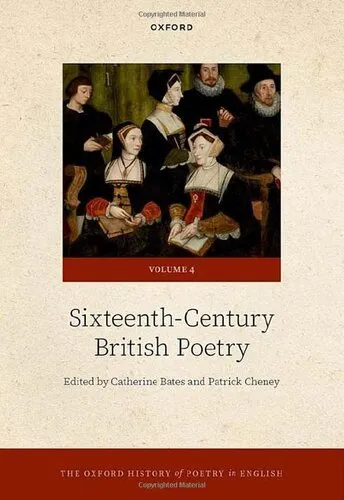
Catherine Bates (editor),Patrick Cheney (editor)
0 reviews
Published
pages
views
The Oxford History of Poetry in English: Volume 4. Sixteenth-Century British Poetry Renaissance poetry, Tudor literary culture Explore The Oxford History of Poetry in English: Volume 4. Sixteenth-Century British Poetry with expert insight into Tudor literary culture. Analyti
Before you read
The Oxford History of Poetry in English: Volume 4. Sixteenth-Century British Poetry stands as an authoritative and expansive exploration of one of Britain’s most transformative literary periods. Edited by Catherine Bates and Patrick Cheney, this volume offers in-depth scholarly perspectives on how the sixteenth century reshaped poetic form, content, and cultural significance across England, Scotland, and Wales.
Covering a period marked by the Renaissance’s intellectual ferment and the Tudor dynasty’s political consolidation, the book delves into the shifting aesthetics that elevated British poetry from medieval traditions to a higher, more expressive art form. The editors have brought together leading literary scholars whose research reveals the intricate interplay between historical events—such as the Reformation—and the poetic innovations that define the era.
Readers will encounter rigorous analyses of figures like Sir Philip Sidney, Edmund Spenser, and Mary Sidney Herbert, alongside lesser-known poets who nonetheless contributed to a vibrant literary landscape. The combination of textual close readings, historical context, and thematic categorisation makes this volume not just a repository of knowledge, but also a critical conversation with the living tradition of poetry.
This volume distills complex literary scholarship into accessible yet deeply researched insights, offering several key takeaways for academics and professionals.
Firstly, it underscores the centrality of poetic form in shaping the identity of sixteenth-century British culture. Secondly, it situates poetry within a vivid spectrum of sociopolitical and religious change, allowing readers to appreciate how art both reflected and challenged prevailing norms. Thirdly, it demonstrates the importance of considering marginal voices—those outside the canonical male writers—to form a fuller picture of the age. Fourthly, the book provides frameworks for interpreting the genre through intertextuality and historical reception. Finally, the editors emphasize the role of translation and cross-cultural contact in expanding England’s poetic horizons.
“Poetry in the sixteenth century was not merely an art form—it was a living discourse between tradition and innovation.” Unknown
“The English Renaissance gave us a vocabulary of beauty still resonant today.” Unknown
“To read Spenser and Sidney is to grasp the ambitions of a nascent literary nation.” Unknown
In an academic landscape crowded with literary histories, The Oxford History of Poetry in English: Volume 4. Sixteenth-Century British Poetry distinguishes itself through its scholarly depth and editorial vision.
Its meticulous attention to both major and minor poets bridges the gap between comprehensive research and accessible narrative. For students, educators, historians, and poetry enthusiasts alike, this volume becomes a vital resource for understanding how cultural conditions, political movements, and innovations in language converged to redefine poetry.
The authors’ commitment to presenting balanced perspectives ensures that no single school of thought dominates. Instead, readers are invited into a dialogue—a hallmark of Renaissance intellectual culture itself—where ideas are tested, refined, and celebrated for their complexity.
The Oxford History of Poetry in English: Volume 4. Sixteenth-Century British Poetry is more than an anthology of facts—it is an invitation to immerse oneself in an era where words were charged with transformative power.
Whether you are a seasoned scholar or a passionate reader seeking to deepen your understanding of Renaissance poetry and Tudor literary culture, this book offers a gateway to nuanced discourse and expanded horizons. By engaging with its pages, you not only revisit a pivotal chapter in British literature but also join a living tradition of interpretation and appreciation.
Take the next step: read, share, and discuss the insights within this volume, allowing the voices of the sixteenth century to enrich and challenge contemporary thought.
Your question is answered in the context of this title and author. Each answer uses 2 points.
0 reviews, 4.8 average out of 5
Sign in to publish a review.
Ask a focused question and learn from the community.
Related references that continue this learning path.
Dennis Freeborn (auth.)
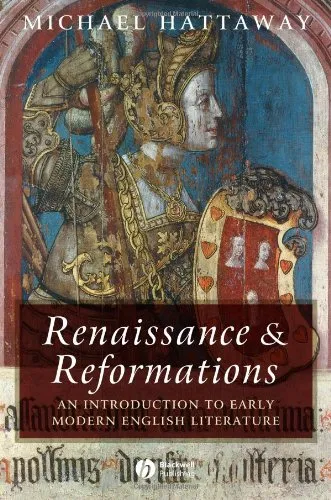
Michael Hattaway