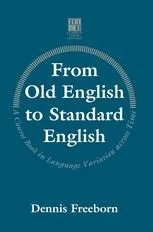
From Old English to Standard English: A Course Book in Language Variation Across Time
Dennis Freeborn (auth.)
1992
View book
Book guide and evaluation
Michael Hattaway
0 reviews
Published
pages
views
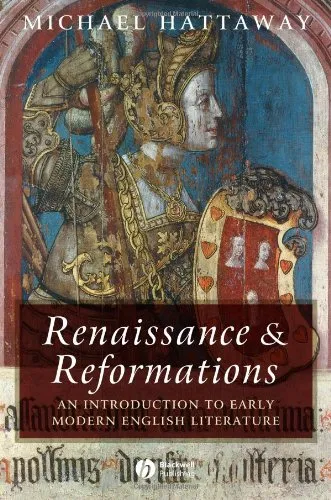
Renaissance and Reformations: An Introduction to Early Modern English Literature Early Modern English literature, Tudor and Stuart cultural history Explore Renaissance and Reformations: An Introduction to Early Modern English Literature with insights into culture, histo
Before you read
The book Renaissance and Reformations: An Introduction to Early Modern English Literature is a scholarly yet accessible guide to one of the most transformative periods in English cultural history. Written for students, academics, and discerning readers, it provides a clear framework to understand how literature evolved during the Renaissance and the Reformations in England, weaving together historical context and literary analysis in a way that illuminates the enduring influence of this era.
This work traces the dynamic interplay between art, politics, religion, and societal change from the late 15th century through the mid-17th century. It situates writers like William Shakespeare, John Donne, and Christopher Marlowe within the tides of religious upheaval and intellectual discovery, explaining how the Protestant Reformations and the revival of classical learning reshaped literary forms and themes.
Information on the exact year of publication is unavailable due to no reliable public source, but the book remains relevant for contemporary audiences studying Early Modern English literature. It delivers an authoritative narrative without assuming prior specialist knowledge, making it valuable both in academic contexts and in independent study.
Readers will come away with a nuanced understanding of how the English Renaissance and the Reformations intertwined, shaping the literary canon and modern thought.
Key insights include the recognition of literature as both a mirror and a moulder of social values, the intricate relationship between religious reform and creative innovation, and the emergence of new literary genres that continue to influence modern storytelling.
The book underscores the significance of rhetorical skill, humanist education, and the tensions between tradition and change that characterized Early Modern England.
“Literature of the Renaissance is a dialogue between the past and present, shaped by faith, discovery, and human ambition.” Unknown
“The Reformations did not merely change the church; they altered the English language itself.” Unknown
“To read the works of the period is to enter into a world negotiating between medieval certainties and modern doubts.” Unknown
This book is not merely a historical survey; it is an interpretative bridge between centuries, drawing out the living relevance of Early Modern English literature for modern readers.
By coupling rigorous scholarship with engaging narrative, Renaissance and Reformations: An Introduction to Early Modern English Literature enriches our appreciation of literary artistry while clarifying the complex socio-political realities that produced it. It encourages readers to think critically about how literature functions within the larger currents of history.
For professionals in literature, history, theology, or cultural studies, the distinction is clear: understanding this period deepens comprehension of English literary heritage and its ongoing role in shaping identity and discourse.
In revisiting the pages of Renaissance and Reformations: An Introduction to Early Modern English Literature, readers are invited to engage in a rich, ongoing conversation about the enduring value of literature as a record of human experience.
This authoritative guide’s synthesis of historical and literary insight makes it essential for anyone seeking to understand not only what was written, but why it was written. The Renaissance and the Reformations were epochs of dramatic transformation; their texts remain windows to the aspirations, conflicts, and curiosities of their age.
Your next step is clear: delve into this work, share its revelations with peers, and discuss its implications in your own scholarly or professional circles. In doing so, you continue the very tradition of intellectual exchange celebrated throughout the Early Modern era.
Your question is answered in the context of this title and author. Each answer uses 2 points.
0 reviews, 4.8 average out of 5
Sign in to publish a review.
Ask a focused question and learn from the community.
Related references that continue this learning path.
Dennis Freeborn (auth.)