
Book guide and evaluation
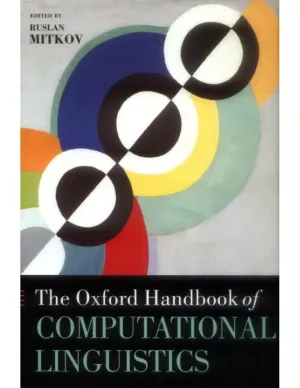
The Oxford Handbook of Computational Linguistics
Mitkov Ruslan (Editor)
English
Beginner
Natural Language Processing
4.5 / 5
0 reviews
-
Published
770
pages
490
views
Introduction Welcome to 'The Oxford Handbook of Computational Linguistics', an authoritative reference work encapsulating the remarkable interdisciplinary field that marries linguistics with computer science. This book aims to cater to both novices and seasoned experts by
Before you read
What will you get from this book?
Introduction
Welcome to 'The Oxford Handbook of Computational Linguistics', an authoritative reference work encapsulating the remarkable interdisciplinary field that marries linguistics with computer science. This book aims to cater to both novices and seasoned experts by offering cutting-edge insights into computational methods applied to the study of language. Enriched with contributions from leading researchers, the handbook serves as a comprehensive guide filled with theoretical insights as well as practical applications.
Detailed Summary of the Book
The book is divided into meticulously organized sections that explore the vast terrain of computational linguistics. It begins with foundational theories and concepts, providing a solid understanding of the mathematical and logical underpinnings of the field. Readers are introduced to key computational models in linguistics, covering everything from syntax, semantics, and phonetics to more advanced topics like machine translation, natural language processing, and language generation.
In subsequent chapters, the focus shifts to real-world applications, showcasing how computational linguistics is used in modern technologies. From speech recognition systems and conversational agents to automated text analysis, these applications demonstrate the critical role of language technology in our rapidly evolving digital landscape. With thoughtful discussions on ethical considerations and the future of the field, this book is not only informational but also thought-provoking.
Key Takeaways
This handbook offers several key takeaways:
- Understanding the integration of linguistic theory with computational techniques is essential for advancing language technologies.
- The interdisciplinary approach opens up novel avenues for innovation in artificial intelligence and human-computer interaction.
- Ethical implications in computational linguistics, such as bias in machine learning models, are crucial considerations for researchers and practitioners.
- The rapid advancement of natural language processing tools offers exciting opportunities for enhancing communication and information accessibility globally.
Famous Quotes from the Book
"In the intricate dance of language and computation, we find the bridge between human cognition and machine intelligence, paving the way for unprecedented interaction."
"As we explore the algorithms that decode language, we simultaneously unveil the complexities of human thought and communication."
Why This Book Matters
The significance of 'The Oxford Handbook of Computational Linguistics' extends beyond its scholarly contributions. It is an essential text for anyone interested in the future of human-computer interaction. By detailing how computational techniques can decode and interpret human language, it provides invaluable insights for technology developers, linguists, and educators alike. Advancing understanding in computational linguistics not only propels technological innovation but also expands the potential for enhanced global communication and accessibility.
The Oxford Handbook of Computational Linguistics matters in the academic sphere for its ability to bridge gaps between disciplines, making it a seminal work that facilitates both theoretical exploration and practical application across multiple domains.
Ask this book
Your question is answered in the context of this title and author. Each answer uses 2 points.
Sign in to ask the book assistant.
Reader reviews
0 reviews, 4.5 average out of 5
No reviews yet
If you have read this book, help the next reader with your experience.
Write a review
Sign in to publish a review.
Reader questions and answers
Ask a focused question and learn from the community.
Sign in to ask or answer a question.
No questions yet
Be the first to ask a clear, useful question.
What to read next
Related references that continue this learning path.
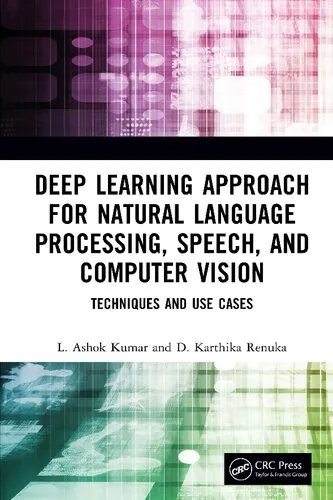
Deep Learning Approach for Natural Language Processing, Speech, and Computer Vision: Techniques and Use Cases
L. Ashok Kumar,D. Karthika Renuka
2023
View book

Deep Learning for Natural Language Processing: A Gentle Introduction
Mihai Surdeanu,Marco Antonio Valenzuela-Escarcega
2024
View book