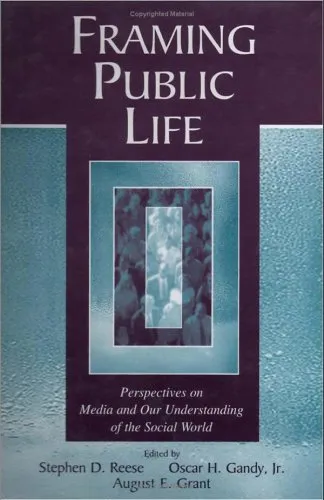
Framing Public Life: Perspectives on Media and Our Understanding of the Social World
Stephen D. Reese,Oscar H. Gandy Jr.,August E. Grant
2001
View book
Book guide and evaluation
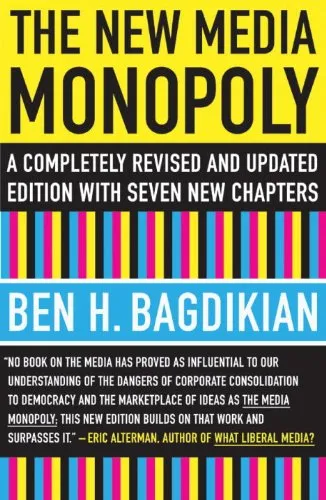
Ben H. Bagdikian Den Emeritus
0 reviews
Published
pages
views
The New Media Monopoly media consolidation, corporate influence on journalism An authoritative exploration of The New Media Monopoly and its impact on media diversity and democracy. Analytical Summary Published by Ben H. Bagdikian, The New Media Monopoly stands as a pivotal
Before you read
Published by Ben H. Bagdikian, The New Media Monopoly stands as a pivotal work in the study of media ownership, exploring the profound implications when a handful of corporations dominate the flow of information in society. This updated edition from his earlier landmark, The Media Monopoly, reflects Bagdikian's decades-long scrutiny of the evolving media landscape.
In the book, Bagdikian meticulously documents how massive conglomerates have absorbed diverse outlets, forging a marketplace where economic power translates into political influence. His analysis goes beyond surface-level observations, delving into the systemic risks of media consolidation—including the erosion of independent journalism and the narrowing of public discourse. By mapping the connections between corporate structures and content delivery, he presents a compelling, data-informed narrative relevant to academics, policymakers, and engaged citizens.
The text serves as both a historical account and a contemporary warning, highlighting how these changes affect reporting on local and global issues. While specific corporate ownership patterns may shift over time, the underlying dynamics Bagdikian describes—pressures to prioritize profit over public interest—remain strikingly pertinent. Information about awards the book may have received is unavailable due to no reliable public source confirming such details.
Bagdikian distills decades of research into lessons that challenge the reader to consider the ethical and civic dimensions of media control. This section synthesizes those insights.
First, media consolidation tends to limit diversity of viewpoints, as conglomerates exert influence over what stories are told and how. Second, corporate influence on journalism often prioritizes advertiser-friendly content, subtly shaping public awareness. Third, a concentrated media environment carries inherent risks for democracy, stifling dissent and investigative rigor. Fourth, critical media literacy emerges as a defense, empowering audiences to question sources and motivations. Lastly, Bagdikian underscores the importance of policy frameworks that protect independent voices in the information ecosystem.
Though concise and analytical, Bagdikian’s work contains passages that resonate deeply, encapsulating the urgency of his message.
When fewer voices dominate the channels of communication, the potential for manipulation of public opinion increases exponentially.Unknown
The public’s right to know is the first casualty when news falls under the sway of corporate priorities.Unknown
In an era of rapid consolidation across digital and traditional media, The New Media Monopoly offers prescient guidance.
Academics will find that the book’s robust methodology and clear exposition make it a reliable reference point for research on media ownership. Professionals in journalism and policy can apply its analyses to contemporary challenges, assessing how regulatory decisions influence the plurality of voices. For serious readers committed to civic engagement, Bagdikian’s work encourages vigilant consumption of news and thoughtful participation in public discourse.
Moreover, the book’s intersection of sociology, political science, and communications provides a multidisciplinary framework that remains relevant, even as technology reshapes the media industry. Its insight into the enduring tension between profit motives and democratic ideals ensures its continued value in discussions of media reform.
By engaging with The New Media Monopoly, readers gain a nuanced comprehension of forces shaping the information they rely on every day.
This is more than a book—it is a call to awareness, urging informed citizens to advocate for diverse and independent media. Bagdikian’s authoritative yet accessible style equips you with the critical tools needed to discuss, teach, and challenge the prevailing structures that guide our news consumption. To honor the spirit of the work, read it attentively, share its lessons widely, and ignite conversations that may pave the way for a more open and democratic media landscape.
Your question is answered in the context of this title and author. Each answer uses 2 points.
0 reviews, 4.6 average out of 5
Sign in to publish a review.
Ask a focused question and learn from the community.
Related references that continue this learning path.
Stephen D. Reese,Oscar H. Gandy Jr.,August E. Grant
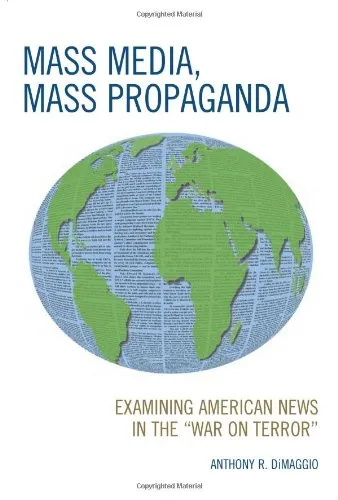
Anthony DiMaggio