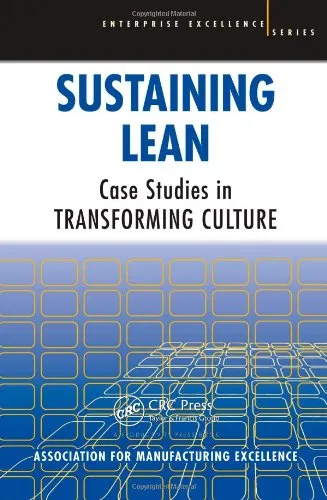
Sustaining Lean: Case Studies in Transforming Culture (Enterprise Excellence)
AME - Association for
2008
View book
Book guide and evaluation
Oliver Sacks
0 reviews
Published
pages
views
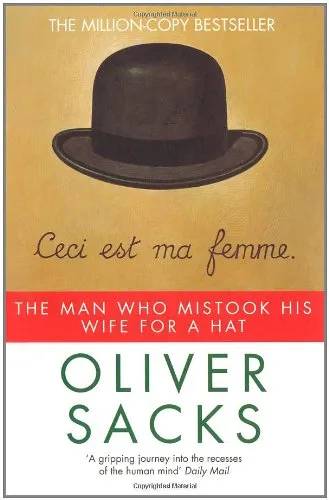
Introduction to 'The Man Who Mistook His Wife for a Hat (Picador)' Oliver Sacks' seminal work, 'The Man Who Mistook His Wife for a Hat,' takes readers on an enthralling journey through the world of neurology, unraveling the complexities of the human brain throu
Before you read
Oliver Sacks' seminal work, 'The Man Who Mistook His Wife for a Hat,' takes readers on an enthralling journey through the world of neurology, unraveling the complexities of the human brain through a series of captivating and poignant case studies. First published in 1985, the book has since become an essential read for anyone interested in understanding the profound effects of neurological disorders on the human condition.
The book is structured into four parts, each focusing on different aspects of neurological disorders. Sacks introduces us to patients with bizarre and often heartbreaking conditions, each illustrating the fragile yet resilient nature of the human brain.
The first section, "Losses," discusses patients experiencing neurological deficits. Notably, it features Dr. P, a music teacher who can't recognize faces but sees the world as abstract shapes—he famously mistakes his wife for a hat. The second section, "Excesses," explores conditions where excessive neurological activity leads to unusual abilities or behaviors, such as Tourette's syndrome manifesting through involuntary tics and urges.
The third part, "Transports," delves into sensations of dissociation and altered perceptions, often caused by chemical imbalances or neurological damage. Finally, the "Simple" category examines intellectual and developmental disabilities, offering insights into how patients with these conditions perceive and navigate the world.
"To talk of diseases is a sort of Arabian Nights entertainment."
"In examining disease, we gain wisdom about anatomy and physiology and biology. In examining the person with disease, we gain wisdom about life."
The significance of 'The Man Who Mistook His Wife for a Hat' lies in its ability to humanize medical practice. Oliver Sacks bridges the gap between clinical neurology and the general public, making the book accessible and informative. It encourages empathy and curiosity about the human mind, inspiring future generations of doctors, scientists, and laypeople alike to view neurological diversity with respect and understanding.
Sacks's work transcends the genre of medical literature by infusing it with philosophical and ethical considerations, prompting readers to reconsider preconceived notions about normality, identity, and the self. The enduring popularity of this book demonstrates the timeless nature of its themes and the universal curiosity about the mysteries of the brain's workings.
Your question is answered in the context of this title and author. Each answer uses 2 points.
0 reviews, 4.6 average out of 5
Sign in to publish a review.
Ask a focused question and learn from the community.
Related references that continue this learning path.
AME - Association for
Jay Lampert (auth.)
Saul Feinman (auth.),Saul Feinman (eds.)