Book guide and evaluation
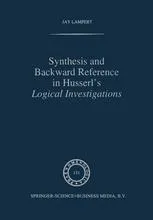
Synthesis and Backward Reference in Husserl’s Logical Investigations
Jay Lampert (auth.)
English
Beginner
Reading
4.8 / 5
0 reviews
1995
Published
230
pages
403
views
Welcome to an engaging exploration of one of the finest works in phenomenological philosophy. In "Synthesis and Backward Reference in Husserl’s Logical Investigations," Jay Lampert offers a profound and intricate analysis of Edmund Husserl’s seminal work, making complex ide
Before you read
What will you get from this book?
Welcome to an engaging exploration of one of the finest works in phenomenological philosophy. In "Synthesis and Backward Reference in Husserl’s Logical Investigations," Jay Lampert offers a profound and intricate analysis of Edmund Husserl’s seminal work, making complex ideas accessible to scholars and literary enthusiasts alike.
Detailed Summary of the Book
"Synthesis and Backward Reference in Husserl’s Logical Investigations" delves into the foundational elements of Husserl's phenomenology. In this book, Jay Lampert elucidates the intricate concepts of synthesis and backward reference that are pivotal in understanding Husserl’s discourse on logic and intentionality. By meticulously dissecting 'Logical Investigations,' the book provides clear insights into how Husserl constructs his theories on the formation of meaning and consciousness.
Lampert unveils how Husserl addresses the capability of consciousness to relate back to itself through synthesis, critically analyzing the role backward references play in cognitive and perceptual acts. This is not just a philosophical investigation but an exploration of how foundational logical structures contribute to the synthesis of experience in human cognition. The book presents a detailed journey through Husserl's treatments of linguistic references, intentionality, and the role of temporality in logic, offering readers a comprehensive understanding of these complex phenomena.
Key Takeaways
- Understanding the mechanism of synthesis in consciousness is vital for grasping the broader concepts of phenomenology.
- Backward reference showcases how temporal elements affect logical structures and meaning formation.
- Husserl’s views on intentionality transform the discourse on how objects and experiences relate within cognitive processes.
- The book empowers readers to approach Husserl’s philosophy pragmatically, encouraging applications beyond theoretical interpretations.
Famous Quotes from the Book
"In locating the essence of synthesis within the realm of consciousness, Husserl does more than offer a thesis—he provides a framework for understanding the architecture of thought itself."
"Backward reference is a bridge that connects the phenomenological present with the continuity of past experiences, forging a coherent structure in the stream of consciousness."
Why This Book Matters
Jay Lampert’s insightful analysis transforms "Synthesis and Backward Reference in Husserl’s Logical Investigations" into an indispensable read for anyone passionate about phenomenology or philosophy in general. By connecting Husserl’s complex ideas with tangible examples and clear explanations, Lampert opens up new avenues for interpreting phenomenological and logical studies.
This book stands as a critical tool for students, scholars, and educators, pushing the boundaries of traditional philosophical discourse. It matters not only as a scholarly work but also as a modern guide to understanding consciousness in a world where the interplay between perception, logic, and language dictates much of human behavior. Through Lampert’s work, we gain profound insights into the mechanics behind our thoughts and experiences, anchoring philosophical exploration to everyday understanding.
Ask this book
Your question is answered in the context of this title and author. Each answer uses 2 points.
Sign in to ask the book assistant.
Reader reviews
0 reviews, 4.8 average out of 5
No reviews yet
If you have read this book, help the next reader with your experience.
Write a review
Sign in to publish a review.
Reader questions and answers
Ask a focused question and learn from the community.
Sign in to ask or answer a question.
No questions yet
Be the first to ask a clear, useful question.
What to read next
Related references that continue this learning path.
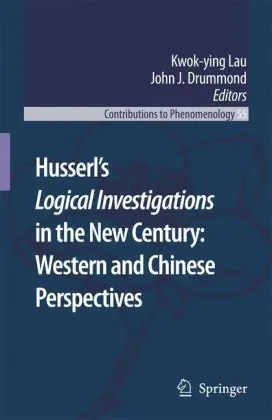
Husserl’s Logical Investigations in the New Century: Western and Chinese Perspectives
Kwok-Ying Lau (editor),John J. Drummond (editor)
2007
View book