Book guide and evaluation
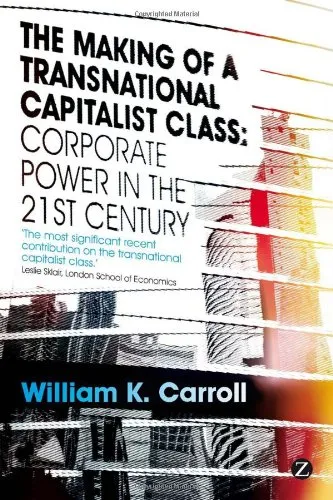
The Making of a Transnational Capitalist Class: Corporate Power in the 21st Century
William K. Carroll
English
Intermediate
novel
4.0 / 5
0 reviews
2010
Published
289
pages
604
views
The Making of a Transnational Capitalist Class: Corporate Power in the 21st Century dives into the intricate world of global power dynamics, shedding light on the emergence and influence of a transnational capitalist class. Authored by William K. Carroll, this compelling bo
Before you read
What will you get from this book?
The Making of a Transnational Capitalist Class: Corporate Power in the 21st Century dives into the intricate world of global power dynamics, shedding light on the emergence and influence of a transnational capitalist class. Authored by William K. Carroll, this compelling book explores how corporate elites and institutions wield unprecedented control over economies and societies worldwide. Through a meticulously researched analysis, Carroll presents a vivid portrayal of the corporate power structure that shapes our modern world, making this book essential reading for anyone seeking to understand contemporary capitalism.
Detailed Summary of the Book
At the heart of The Making of a Transnational Capitalist Class is the investigation into the formation and evolution of a global capitalist class. Carroll examines the nexus between corporate power and global governance, highlighting the role of interconnected networks of corporate directors, financial institutions, and transnational corporations (TNCs). The book delves into the restructuring of capitalism over the past few decades, illustrating how corporate elites have transcended national boundaries to form a cohesive class that exercises significant influence over the global economy.
Drawing from an extensive array of empirical data, Carroll outlines the ways in which these transnational actors have come to dominate key industries and strategically position themselves to impact policy decisions at the highest levels. The analysis extends beyond corporate structures to examine the cultural and ideological frameworks that support and sustain this global capitalist class. By exploring the relationships among corporate board members, think tanks, and policy groups, Carroll reveals the intricacies of power and influence that underpin contemporary capitalism.
Key Takeaways
- The concept of a transnational capitalist class offers a lens through which to view the global concentration of economic power and its socio-political implications.
- Corporate networks play a crucial role in shaping economic policies and fostering cross-border economic integration.
- The influence of corporate elites extends beyond economics, impacting cultural norms and ideologies worldwide.
- Understanding the dynamics of this transnational class is vital for addressing global inequality and developing strategies for more democratic governance.
Famous Quotes from the Book
Carroll provides profound insights throughout his book. Here are some notable excerpts:
"The global economy is not simply a marketplace; it is a complex structure of power relations."
"Transnational networks of directors and executives link the world's major corporations, creating a unique and powerful layer of global governance."
"The making of a transnational capitalist class is indicative of a shift in how power is constructed and maintained in the contemporary era."
Why This Book Matters
The Making of a Transnational Capitalist Class is crucial for understanding the changing landscape of global capitalism. In an era of rapid globalization, the rise of a transnational capitalist class marks a significant shift in how economic power is distributed and exercised. By highlighting the interconnected nature of corporate elites and their pervasive influence, Carroll's book offers invaluable insights for policymakers, scholars, and activists who seek to challenge the status quo and advocate for a more equitable global order. Furthermore, the book serves as a critical resource for those interested in the intersections of economics, politics, and sociology, providing a comprehensive framework for analyzing power in the 21st century.
Ask this book
Your question is answered in the context of this title and author. Each answer uses 2 points.
Sign in to ask the book assistant.
Reader reviews
0 reviews, 4.0 average out of 5
No reviews yet
If you have read this book, help the next reader with your experience.
Write a review
Sign in to publish a review.
Reader questions and answers
Ask a focused question and learn from the community.
Sign in to ask or answer a question.
No questions yet
Be the first to ask a clear, useful question.
What to read next
Related references that continue this learning path.