

Leadership for the common good: tackling public problems in a shared-power world
Barbara C. Crosby,John M. Bryson
2005
View book
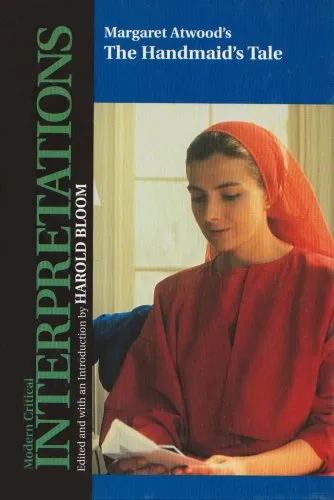
Book guide and evaluation
Harold Bloom,Margaret Atwood
0 reviews
Published
pages
views
Introduction "The Handmaid’s Tale" is a seminal work by Margaret Atwood, first published in 1985. This dystopian novel has captivated readers and scholars worldwide with its chilling depiction of a future society. Set in the totalitarian regime of Gilead, the narrative exp
Before you read
"The Handmaid’s Tale" is a seminal work by Margaret Atwood, first published in 1985. This dystopian novel has captivated readers and scholars worldwide with its chilling depiction of a future society. Set in the totalitarian regime of Gilead, the narrative explores themes of power, control, and women's subjugation. Atwood's razor-sharp prose and chilling foresight offer a cautionary tale that remains relevant to contemporary societal issues.
"The Handmaid’s Tale" unfolds in a dystopian future where environmental disasters and a declining birth rate have led to the rise of the Republic of Gilead, a theocratic dictatorship that has replaced the United States. In this new world, women have lost their rights and are categorized based on their functionality. The protagonist, Offred, is a Handmaid, one of the few fertile women left, forced into sexual servitude to bear children for the ruling class. Through Offred’s eyes, readers witness the atrocities of Gilead, as well as her memories of the time before this dictatorship.
The story is crafted through a blend of Offred's present-day experiences and flashbacks. These flashbacks provide insight into how Gilead’s society came to be, revealing the gradual stripping away of women's rights and the societal acceptance that followed. Offred’s narrative is deeply personal and introspective, offering a window into her fear, resilience, and moments of defiance. Her interactions with other Handmaids, members of the Eye (a secret police), and various members of the ruling class highlight the different ways individuals navigate a repressive society.
"Nolite te bastardes carborundorum." — This pseudo-Latin phrase, supposedly meaning "Don't let the bastards grind you down," symbolizes resistance.
"Better never means better for everyone… It always means worse, for some." — This quote reflects on the socio-political systems and their impact on different social groups.
"When we think of the past it's the beautiful things we pick out. We want to believe it was all like that." — A contemplation on memory and nostalgia in times of crisis.
"The Handmaid’s Tale" is more than a vivid work of speculative fiction; it is a poignant exploration of human nature and society. Atwood's creation serves as a powerful reminder of the fragility of human rights and the ease with which freedoms can be curtailed. Her insightful commentary on gender, power, and identity resonates with ongoing global debates, making this novel a crucial text for readers interested in feminist literature and the dynamics of power.
The novel's continuing adaptation into television series and plays indicates its lasting influence and relevance. It is a work that not only challenges the reader's perspective but also inspires a critical examination of the world around us. By highlighting both the darkest depths and the resilient spirit of humanity, "The Handmaid’s Tale" remains an essential read for anyone contemplating the past, present, and future of society.
Your question is answered in the context of this title and author. Each answer uses 2 points.
0 reviews, 4.4 average out of 5
Sign in to publish a review.
Ask a focused question and learn from the community.
Related references that continue this learning path.
Barbara C. Crosby,John M. Bryson
Thomas L. Thompson,Frederick H. Cryer
M. De Jonge,H. W. Hollander,H. J. De Jonge,Th Korteweg