Book guide and evaluation
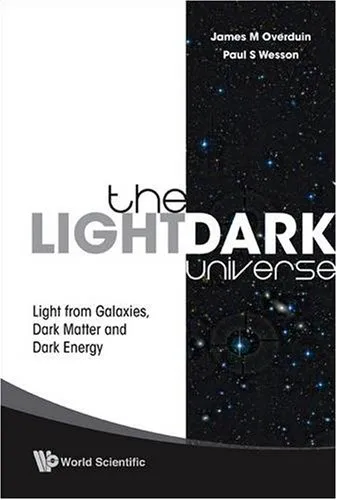
The Light/Dark Universe: Light from Galaxies, Dark Matter and Dark Energy
James M. Overduin,Paul S. Wesson
English
Intermediate
novel
5.0 / 5
0 reviews
2008
Published
236
pages
276
views
To the eyes of the average person and the trained scientist, the night sky is dark, even though the universe is populated by myriads of bright galaxies. Why this happens is a question commonly called Olbers' Paradox, and dates from at least 1823. How dark is the night sky is a qu
Before you read
What will you get from this book?
To the eyes of the average person and the trained scientist, the night sky is dark, even though the universe is populated by myriads of bright galaxies. Why this happens is a question commonly called Olbers' Paradox, and dates from at least 1823. How dark is the night sky is a question which preoccupies astrophysicists at the present. The answer to both questions tells us about the origin of the universe and the nature of its contents - luminous galaxies like the Milky Way, plus the dark matter between them and the mysterious dark energy which appears to be pushing everything apart.In this book, the fascinating history of Olbers' Paradox is reviewed, and the intricate physics of the light/dark universe is examined in detail. The fact that the night sky is dark (a basic astronomical observation that anybody can make) turns out to be connected with the finite age of the universe, thereby confirming some event like the Big Bang. But the space between the galaxies is not perfectly black, and data on its murkiness at various wavelengths can be used to constrain and identify its unseen constituents.
Ask this book
Your question is answered in the context of this title and author. Each answer uses 2 points.
Sign in to ask the book assistant.
Reader reviews
0 reviews, 5.0 average out of 5
No reviews yet
If you have read this book, help the next reader with your experience.
Write a review
Sign in to publish a review.
Reader questions and answers
Ask a focused question and learn from the community.
Sign in to ask or answer a question.
No questions yet
Be the first to ask a clear, useful question.
What to read next
Related references that continue this learning path.
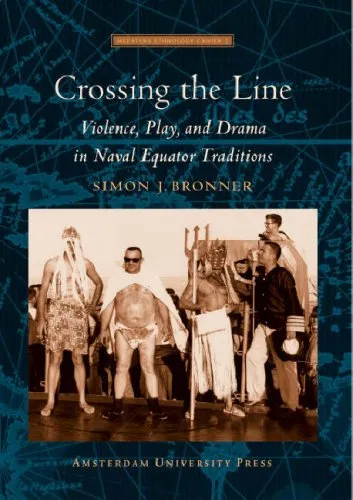
Crossing the Line: Violence, Play, and Drama in Naval Equator Traditions
Simon J. Bronner
2007
View book