

The Mathematical Experience, Study Edition
Philip J. Davis,Reuben Hersh,Elena Anne Marchisotto (auth.)
2012
View book

Book guide and evaluation
Fulvia Furinghetti;Livia Giacardi
0 reviews
Published
pages
views
Introduction "The International Commission on Mathematical Instruction, 1908-2008: People, Events, and Challenges in Mathematics Education" is a comprehensive exploration of the evolution of one of the most influential organizations in mathematics education over a century. Thi
Before you read
"The International Commission on Mathematical Instruction, 1908-2008: People, Events, and Challenges in Mathematics Education" is a comprehensive exploration of the evolution of one of the most influential organizations in mathematics education over a century. This book provides a deep dive into the history, people, and pivotal moments that shaped the International Commission on Mathematical Instruction (ICMI). With a keen focus on how mathematics education has transformed globally, it highlights the contributions of scholars, educators, and policymakers in fostering interdisciplinary collaborations and addressing the ever-evolving challenges in the field. Organized into thematic sections, this work stands as a testament to the progress made in mathematics education and serves as an inspiration for its future development.
The book traces the century-long history of the International Commission on Mathematical Instruction (ICMI), established in 1908. Through this historical lens, it presents a rich narrative of mathematics education, detailing how this organization has worked tirelessly to shape the teaching and learning of mathematics across the globe. The authors examine the key milestones, including how ICMI weathered turbulent periods such as the World Wars, the Cold War, and the profound cultural shifts of the 20th and early 21st centuries.
One of the central themes of the book is the interplay between mathematics education and the social, political, and technological changes that influenced it. Detailed accounts of the early pioneers, the evolution of ICMI’s leadership, and their roles in enhancing mathematical instruction reveal how education functioned as a bridge between nations and communities. Other chapters delve into ICMI’s contributions to major international congresses, its publications, and its role in fostering cooperation between researchers, educators, and institutions.
In addition to the historical overview, the book sheds light on contemporary issues in mathematics education, such as equity, accessibility, and the integration of technology. By reflecting on the lessons of the past, the authors provide a forward-looking perspective, urging policymakers, researchers, and educators to continue collaborations that transcend geographical and disciplinary boundaries.
The book provides a wealth of information and analysis, making it essential for anyone interested in the global impact of education.
"Mathematics education, like history itself, is a living dialogue—an ongoing conversation about the past, present, and future of human knowledge." - Fulvia Furinghetti & Livia Giacardi
"Through the International Commission on Mathematical Instruction, we see how education transcends borders, fostering mutual understanding and growth." - Authors
"The work of ICMI reminds us that the teaching of mathematics is neither static nor isolated; it is influenced by culture, technology, and human needs." - Book Excerpt
This book is an essential contribution to the history and philosophy of education. As a comprehensive account of ICMI’s journey, it offers valuable lessons for educators, policymakers, researchers, and students. The authors meticulously highlight the interplay between historical contexts and the evolution of mathematical pedagogy. Moreover, the book illustrates the profound connection between cultural and social challenges and their impact on education.
By documenting the efforts of ICMI, this book sheds light on the resilience and adaptability required to advance mathematics instruction in a rapidly changing and interconnected world. It motivates educators to take an interdisciplinary approach to problem-solving, ensuring that mathematics continues to serve humanity at large.
Ultimately, this work underscores the central importance of collaboration, inclusivity, and innovation in the international dialogue on mathematics education, making it a vital resource for understanding where we've come from and where we should go next.
Your question is answered in the context of this title and author. Each answer uses 2 points.
0 reviews, 4.0 average out of 5
Sign in to publish a review.
Ask a focused question and learn from the community.
Related references that continue this learning path.
Philip J. Davis,Reuben Hersh,Elena Anne Marchisotto (auth.)
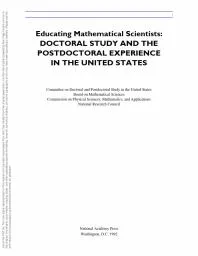
National Research Council; Committee on DoctoralandPostdoctoral Study in the United States
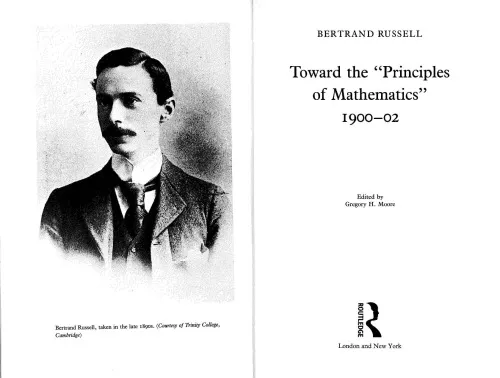
Bertrand Russell