
SOFTWARE ARCHITECTURE WITH C# 10 AND .NET 6 : develop software solutions using... microservices, devops, ef core, and design pattern.
GABRIEL ABBRUZZESE FRANCESCO BAPTISTA
2022
View book
Book guide and evaluation
Alan Cooper
0 reviews
Published
pages
views
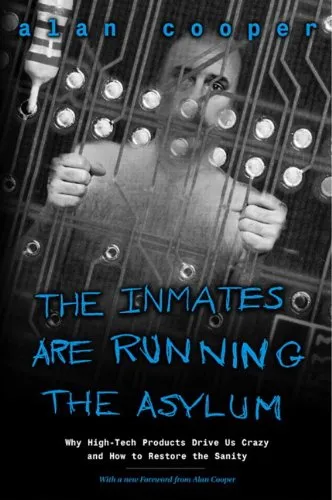
Introduction Welcome to a comprehensive exploration of "The Inmates Are Running the Asylum: Why High Tech Products Drive Us Crazy and How to Restore the Sanity," a seminal work by Alan Cooper that delves into the intersection of technology and usability. This book
Before you read
Welcome to a comprehensive exploration of "The Inmates Are Running the Asylum: Why High Tech Products Drive Us Crazy and How to Restore the Sanity," a seminal work by Alan Cooper that delves into the intersection of technology and usability. This book serves as an eye-opener for those frustrated with how complicated modern tech products can be. Cooper, often regarded as the "Father of Visual Basic," uses his expertise to shed light on why these products often do more harm than good regarding user experience. Through this introduction, we will take a closer look at the detailed summary of the book, key takeaways, famous quotes, and why this book matters today more than ever.
"The Inmates Are Running the Asylum" acts as a wake-up call for industries overly reliant on technology without considering its impact on the end user. Alan Cooper argues that software engineers and developers have too much control over product design. The title itself is a metaphor, suggesting that the tech-savvy individuals (the "inmates") are controlling the development process at the expense of usability and user experience. Throughout the book, Cooper introduces the concept of "Cognitive Friction," where end-users struggle to use products due to poor interface design and decision-making driven by engineering logic over human-centric design principles. He passionately argues for the role of interaction design and the importance of creating empathetic technology that puts human needs first.
"If we want users to like our software, we should design it to behave like a likeable person: respectful, generous, and helpful."
"The secret to making great products is not to try to make the perfect product for every user, but instead to make a great product for a single, specific user."
In a world increasingly dominated by digital interactions, "The Inmates Are Running the Asylum" remains a critical work for tech professionals and users alike. The insights provided by Cooper are more relevant than ever, as software and digital products play a pivotal role in daily life and work. The book challenges the conventional engineering-led development process, urging companies to prioritize user experience and human-centric design. By doing so, it not only enhances user satisfaction but also drives success in today’s competitive technology market. This book is a must-read for anyone involved in building digital products, serving as both a guide and a manifesto for creating technology that genuinely improves the human experience.
Your question is answered in the context of this title and author. Each answer uses 2 points.
0 reviews, 4.5 average out of 5
Sign in to publish a review.
Ask a focused question and learn from the community.
Related references that continue this learning path.
GABRIEL ABBRUZZESE FRANCESCO BAPTISTA

Cliff Kuang;Robert Fabricant